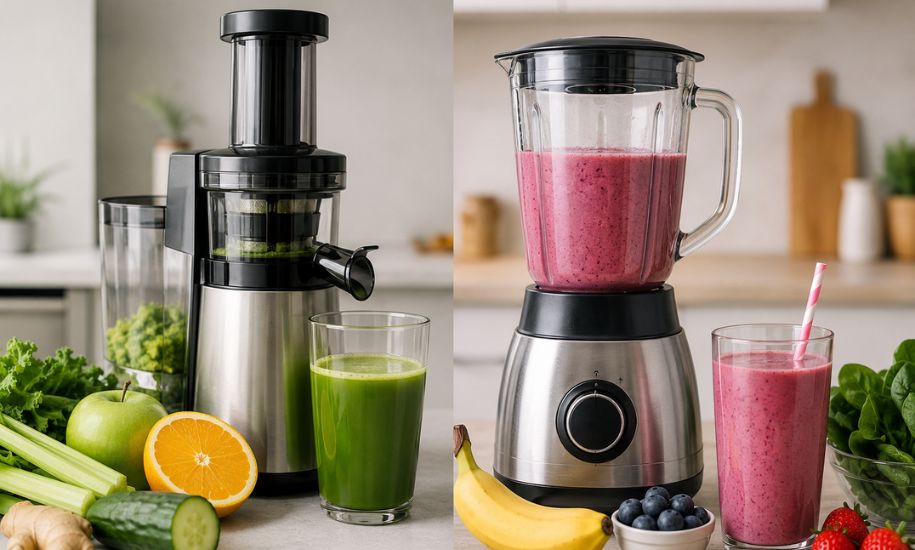
Choosing between a juicer and a blender can seem simple until you start comparing what each appliance actually does. Both can turn fruits and vegetables into convenient drinks, but the final results, nutritional profile, preparation process, and versatility are quite different. A juicer extracts liquid while leaving much of the pulp behind, whereas a blender processes the entire ingredient into a thicker drink. Understanding these differences can help you choose the appliance that genuinely fits your eating habits and kitchen routine.
What Is the Difference Between a Juicer and a Blender?
The biggest difference comes down to how each machine handles the ingredients.
A juicer separates liquid from the solid parts of fruits and vegetables. Depending on the type of juicer, produce is crushed, pressed, or shredded before the juice is extracted. The result is usually a thin, smooth drink with little or no pulp.
A blender, on the other hand, breaks down the entire ingredient. The skin, pulp, fiber, and juice generally remain in the finished mixture. This produces the familiar thick consistency associated with smoothies.
Neither appliance is automatically better. The right choice depends on whether you want fresh juice, a filling smoothie, greater versatility, or a convenient way to incorporate whole produce into your diet.
Juicer vs Blender: How Each Appliance Works
A juicer is designed specifically for extracting liquid. Hard fruits and vegetables such as carrots and apples can be processed, while leafy greens, cucumber, celery, and other produce can also work well with appropriate models.
There are several types of juicers, including centrifugal, masticating, and citrus juicers. Centrifugal models generally work quickly, while masticating or slow juicers crush and press produce at a slower speed.
Blenders work differently. Their blades rapidly break ingredients into smaller particles. Adding liquid can make the process easier and produce a smoother consistency. Modern blenders can handle everything from frozen berries and bananas to leafy greens, yogurt, oats, nuts, and ice.
This fundamental difference explains why juice is generally light and clear while a smoothie tends to be thick and substantial.
Fiber: The Biggest Nutritional Difference
Fiber is one of the most important considerations when comparing the two appliances.
When produce is processed through a juicer, much of the insoluble fiber is separated into the pulp. The resulting juice can still contain vitamins, minerals, plant compounds, and other nutrients, but it does not provide the same amount of dietary fiber as the original whole fruit or vegetable.
Blending usually keeps the fiber because the entire ingredient is processed into the drink. Fiber can contribute to feelings of fullness and is an important part of a balanced diet.
This does not mean that juice has no nutritional value. Fresh vegetable juice, for example, can provide a convenient source of nutrients. However, juice should not necessarily be viewed as a complete substitute for eating whole fruits and vegetables.
Juicer vs Blender for Weight Loss
People interested in weight management often wonder whether juicing or blending is the better option.
A well-prepared smoothie can have an advantage because it retains fiber and can include protein-rich or nutrient-dense ingredients. Greek yogurt, chia seeds, oats, leafy greens, berries, and other whole foods can create a more satisfying drink.
Juice is usually easier to consume quickly because it contains less solid material. Fruit juice can also concentrate the natural sugars found in several pieces of fruit into a relatively small serving.
The important factor is what goes into the drink. A smoothie loaded with sweetened yogurt, honey, dates, nut butter, and large amounts of fruit can become very calorie-dense. Similarly, a large glass of fruit juice can provide a substantial amount of naturally occurring sugar.
For weight management, portion size and overall diet matter more than simply choosing one appliance.
Taste and Texture
Texture can make a major difference in which machine you prefer.
Juice is generally smooth, light, and refreshing. People who dislike pulp or prefer a drink that feels more like a traditional fruit or vegetable beverage may appreciate a juicer.
Smoothies are thicker and more filling. Depending on the ingredients and blender, they can range from silky and creamy to slightly textured. Frozen fruit, banana, avocado, yogurt, and nut butter can create a particularly rich consistency.
Neither texture is inherently superior. It largely comes down to personal preference and the type of drink you want.
Which Is More Versatile?
When it comes to versatility, the blender usually has the advantage.
A blender can be used for far more than drinks. Depending on the model, it can prepare smoothies, sauces, dips, soups, salsa, frozen desserts, milkshakes, dressings, and other recipes. Some powerful blenders can also crush ice and process harder ingredients.
A juicer is much more specialized. Its main purpose is extracting juice, although different models may offer features designed for particular ingredients.
For someone buying only one appliance, a blender can therefore be the more practical choice if they want something useful for a wide range of recipes.
Best Ingredients for a Juicer
Juicers are particularly useful for produce with a high water content or ingredients that can release substantial amounts of liquid.
Popular choices include:
- Apples
- Carrots
- Celery
- Cucumber
- Beets
- Ginger
- Pineapple
- Oranges
- Tomatoes
- Leafy greens
Vegetable combinations can produce refreshing drinks without requiring additional sweeteners. Ginger, lemon, cucumber, celery, and leafy greens are also commonly combined to create distinctive fresh juices.
However, ingredients should always be checked against the manufacturer’s recommendations because not every juicer handles every type of produce in the same way.
Best Ingredients for a Blender
Blenders are particularly useful when you want to retain the whole ingredient.
Bananas and berries are popular smoothie ingredients because they provide flavor and a naturally thick texture. Mango, avocado, spinach, kale, oats, yogurt, seeds, and frozen fruit can also work well.
One benefit is the ability to combine different food groups in one drink. For example, a smoothie could contain fruit for flavor, leafy greens for vegetables, yogurt for protein, and seeds for additional nutrients.
The result can be much closer to a complete snack or breakfast than a simple glass of juice.
Can a Blender Replace a Juicer?
A blender can produce a juice-like drink, but it does not work in exactly the same way as a dedicated juicer.
You can blend fruits or vegetables with water and then strain the mixture through a fine mesh strainer or another suitable filter. This removes some of the pulp and creates a thinner beverage.
However, the extra straining step takes time and can eliminate some of the fiber that makes blending attractive in the first place.
If you occasionally want juice, a blender may be enough. If fresh juice is a regular part of your routine, a dedicated juicer will generally be more convenient.
Juicer vs Blender: Which One Should You Choose?
The best choice depends on your main purpose.
Choose a juicer if you primarily want:
- Fresh fruit or vegetable juice
- Smooth, pulp-free drinks
- Green juices
- Vegetable-focused beverages
- Dedicated juice preparation
Choose a blender if you primarily want:
- Smoothies
- High-fiber drinks
- Filling breakfasts
- Soups and sauces
- Frozen drinks
- A versatile kitchen appliance
There is also nothing wrong with owning both if you regularly enjoy different types of drinks. A juicer can handle dedicated juice preparation while a blender can cover everyday cooking and smoothie needs.
Final Verdict
The Juicer vs Blender debate does not have one universal winner. A juicer is the better specialist when the goal is fresh, smooth juice, while a blender is usually the more versatile option and preserves the fiber of whole ingredients. For everyday kitchen use, smoothies, and recipes beyond beverages, a blender may offer greater value. For people who specifically enjoy fresh vegetable or fruit juice, a good juicer can be a worthwhile addition. Ultimately, the best appliance is the one that matches your preferred foods, preparation habits, and lifestyle. For more practical comparisons and useful lifestyle guides, Insider Newz can help readers make informed choices for their everyday routines.