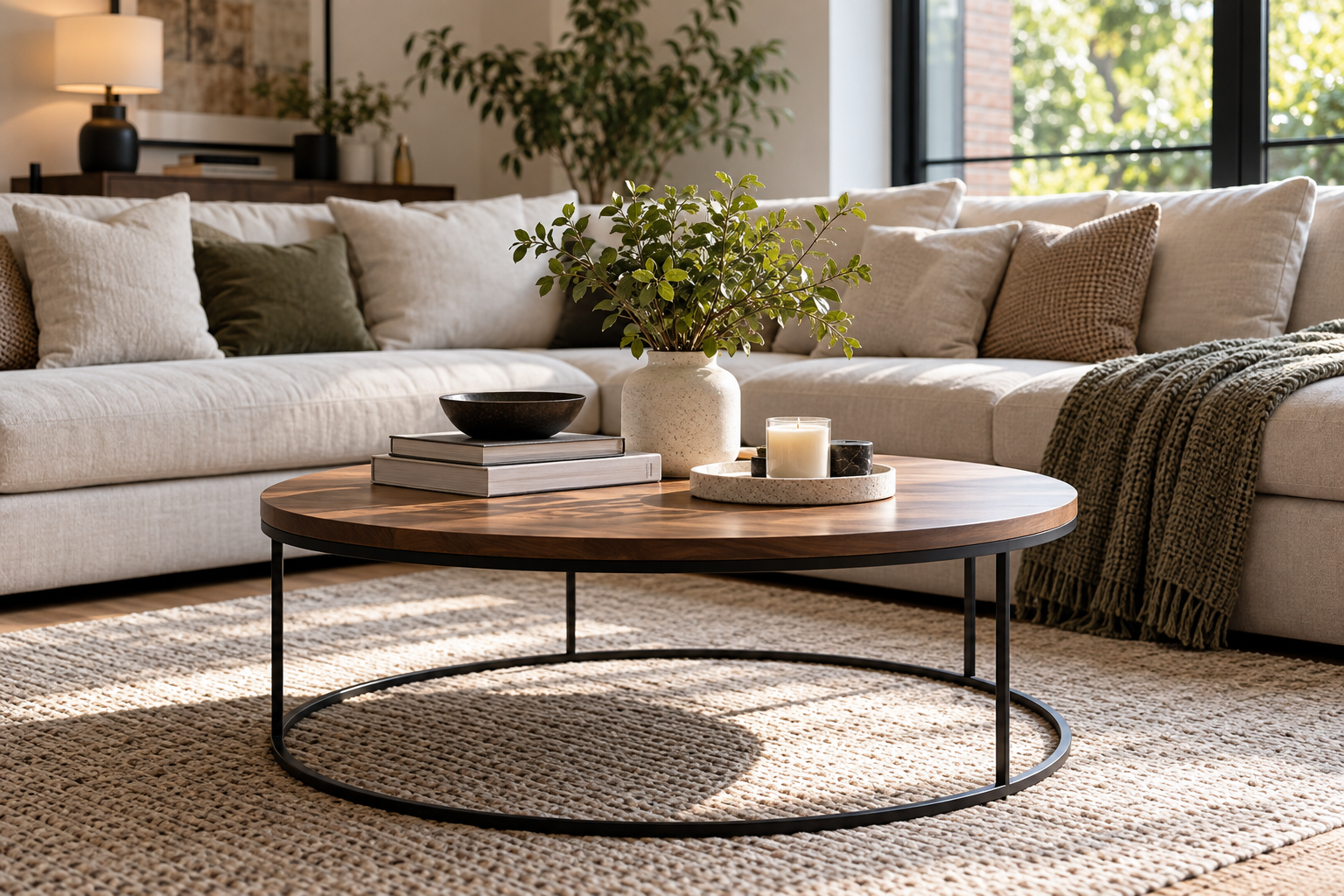
A coffee table may be one of the smaller pieces of furniture in a living room, but it has a major influence on how balanced, comfortable and practical the space feels. Choosing the right size, shape and material can help your table work naturally with your sofa while complementing the overall interior.
Choosing the right coffee table can make a noticeable difference to both the appearance and functionality of a living room. Although it may seem like a relatively small piece of furniture, the coffee table often sits at the centre of the seating area and helps connect the sofa, chairs, rug and surrounding décor.
The best choice should not be based on style alone. Size, height, shape, material and the available space around the sofa all play an important role. A table that is correctly proportioned will feel naturally integrated into the room, while one that is too large or too small can make even a carefully designed interior feel unbalanced.
Start by Measuring Your Sofa
Your sofa should be the starting point when choosing a coffee table. Before considering colour or material, measure the width and height of the seating area.
As a general guideline, a coffee table that is around two-thirds the length of the sofa often creates pleasing proportions. For example, a very long three-seater sofa may look better with a wider rectangular table, while a smaller two-seater can often be paired with a more compact design.
Height is equally important. Ideally, the surface of the coffee table should be approximately level with the sofa seat cushions or slightly lower. This keeps drinks, books and other items easy to reach without creating a table that visually dominates the seating.
It is also useful to mark the dimensions of a potential table on the floor using masking tape. This gives you a much clearer idea of how much space it will actually occupy.
Leave Comfortable Space Around the Table
A coffee table needs to be close enough to the sofa to be useful, but not so close that movement becomes difficult.
In many living rooms, leaving around 40 to 50 centimetres between the sofa and the table provides a comfortable balance. This usually gives enough room for people to walk through while keeping the tabletop within easy reach.
You should also think about other furniture nearby. If the coffee table sits between the sofa and a television unit, fireplace or armchair, make sure there is still a clear route through the room.
When comparing dimensions, styles and finishes, browsing a selection of coffee tables from K&B London can help show how different proportions and designs may work with different sofa sizes and room layouts.
Choose the Right Shape for Your Seating Layout
Shape has a significant impact on both appearance and practicality.
Rectangular coffee tables are a natural match for standard two- and three-seater sofas. Their longer shape follows the line of the sofa and provides generous surface space for drinks, decorative pieces and books.
Square tables can work particularly well with large corner sofas or seating arrangements where chairs are positioned around several sides of the table. However, because they take up more depth, they are usually better suited to larger living rooms.
Curved designs offer a softer alternative. Round coffee tables are especially useful in compact rooms, family spaces and interiors where the sofa or other furniture has strong straight lines. Without sharp corners, they can also make it easier to move around the seating area.
Oval tables are another practical choice, providing much of the surface area of a rectangular design while introducing softer edges.
Consider How Other Furniture Works with the Coffee Table
A coffee table rarely stands alone. It should work alongside sideboards, shelving, television units and occasional furniture elsewhere in the room.
Rather than trying to match every item exactly, aim for a coordinated look. Repeating one or two materials or colours is usually enough to create visual consistency.
For example, a coffee table with a dark metal frame may work particularly well in a room that also includes black console tables, lamps or shelving with similar finishes. This creates a connected look without making the room feel overly matched.
The key is to allow each piece to have its own purpose while still contributing to the same overall style.
Wood for Warmth and Versatility
Wood remains one of the most popular materials for coffee tables because it works with a wide range of interiors.
Natural wood grain can add warmth and texture to a room, particularly when paired with neutral fabric sofas, soft rugs and muted wall colours. Lighter woods can make a space feel relaxed and Scandinavian-inspired, while darker finishes often create a more traditional or sophisticated atmosphere.
Wood is also relatively easy to combine with other materials. A wooden tabletop with metal legs, for instance, can introduce both warmth and structure.
Glass for a Lighter Appearance
Glass coffee tables can be an excellent choice in smaller spaces because they create less visual weight.
A transparent tabletop allows more of the rug and floor to remain visible, which can help the room feel more open. This is particularly useful when the sofa is large or the seating area already contains several substantial pieces of furniture.
Glass can also suit contemporary interiors very well, especially when combined with metal frames.
The main consideration is maintenance, as fingerprints, dust and marks can be more visible on glass surfaces.
Marble and Stone for a Statement Look
Marble and stone-style coffee tables can introduce a more luxurious and decorative feel to a living room.
Natural patterns in stone can make each table feel distinctive, while neutral colours such as white, cream, grey and black make them relatively easy to coordinate with sofas and rugs.
These materials can also provide a strong focal point in interiors where the sofa is simple in design.
However, genuine stone can be heavy, so consider how often you may want to move the table before choosing a particularly substantial piece.
Metal for Modern Interiors
Metal is commonly used for both complete coffee tables and frames combined with other materials.
Black metal works especially well in modern, industrial and minimalist interiors, while brass or gold-toned finishes can introduce warmth and a more decorative character.
Metal frames are often visually lighter than solid wooden bases, making them useful when you want a larger tabletop without creating an overly heavy look.
Think About Storage and Everyday Use
Appearance matters, but the table should also suit the way you use your living room.
If the space is regularly used for entertaining, a larger tabletop can provide enough room for drinks and snacks. If you prefer a clutter-free interior, look for tables with drawers, shelves or hidden storage.
Two-tier designs are useful for keeping books, magazines and remote controls below the main surface, while nesting tables offer additional flexibility in smaller rooms.
Families with young children may also prefer rounded edges, while lightweight tables can be practical in homes where furniture is moved frequently.
Use Contrast to Create a More Interesting Interior
Your coffee table does not have to perfectly match your sofa.
In many cases, contrast creates a stronger and more attractive result. A large upholstered sofa can be balanced by a slim metal-and-glass table, while a modern minimalist sofa may look warmer when paired with natural wood.
A pale sofa can also work well with a darker coffee table, creating a clear focal point in the centre of the room.
Instead of matching colours exactly, look for tones and materials that complement each other.
Final Thoughts
The right coffee table should feel like a natural part of the living room rather than an isolated piece of furniture.
Start by considering the size and height of your sofa, then make sure there is enough space for comfortable movement around the table. From there, choose a shape that suits the seating arrangement and a material that reflects both your interior style and practical needs.
Rectangular tables are versatile, round designs create softer flow, wood adds warmth, glass keeps the room feeling open, and stone or metal can introduce a stronger decorative statement.
By balancing size, shape, material and functionality, you can choose a coffee table that not only looks attractive but also makes the living room more comfortable and practical every day.