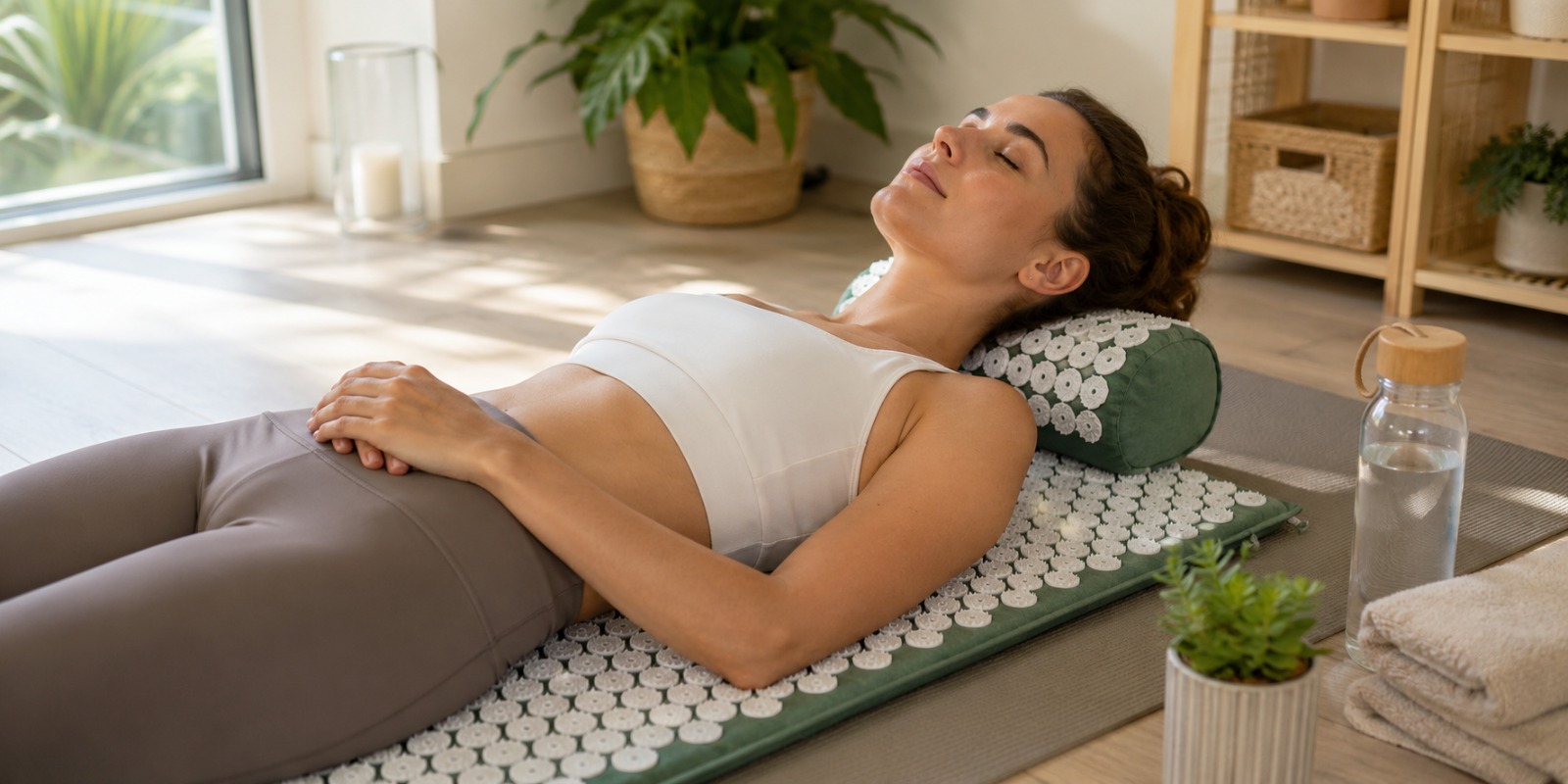
Modern routines can place a surprising amount of strain on both the body and mind. Long hours at a desk, demanding workouts, frequent screen use and everyday responsibilities can all contribute to muscle tension, mental fatigue and difficulty switching off at the end of the day. While good sleep, regular movement and balanced nutrition remain the foundations of wellbeing, many people also look for simple self-care practices that can make relaxation easier to build into everyday life.
One option that has become increasingly popular is the acupressure mat. Designed with hundreds or even thousands of small raised pressure points, these mats provide a distinctive sensation across the areas of the body placed against them. For some people, spending a short period lying on a mat becomes a useful way to slow down, relax and create a more intentional wellness routine.
What Is an Acupressure Mat?
An acupressure mat is usually a padded mat covered with small plastic stimulation points arranged in clusters. Some sets also include a matching pillow that can be positioned beneath the neck, shoulders or other areas.
Although the concept takes inspiration from traditional acupressure, using a mat is different from receiving treatment from an acupressure practitioner. A professional typically applies targeted pressure to specific points, while a mat distributes pressure over a much larger area of the body.
When someone first lies on an acupressure mat, the sensation can feel sharp or intense. After several minutes, however, many users report that the sensation becomes warmer and more comfortable as they relax into the surface.
The experience is highly individual. Some people enjoy using the mat directly against the skin, while beginners may prefer wearing a thin shirt until they become accustomed to the pressure.
Creating Space for Relaxation
One of the simplest benefits of using an acupressure mat is that it encourages a person to stop moving for a few minutes.
Daily life often involves constant stimulation. Notifications, emails, household responsibilities and work tasks can make genuine downtime surprisingly difficult. Setting aside even 10 to 20 minutes for a quiet wellness practice can help create a clear transition between activity and rest.
Lying on an acupressure mat can become part of that transition.
The pressure sensation naturally draws attention toward the body, making it easier to focus on breathing rather than screens, messages or unfinished tasks. Combining the mat with slow breathing can create an especially calming routine.
For example, someone might lie down comfortably, close their eyes and breathe slowly through the nose while allowing the shoulders and back to relax. This does not need to become a complicated meditation session. The goal is simply to create a short period during which the body and mind are allowed to slow down.
Supporting a Post-Workout Recovery Routine
Recovery is an essential part of any exercise programme. Muscles need time to rest between demanding workouts, and recovery habits can influence how prepared someone feels for their next training session.
An acupressure mat can be incorporated into a broader post-workout routine alongside proven basics such as hydration, appropriate nutrition, adequate sleep, gentle mobility work and rest.
After exercise, lying on the mat may provide a relaxing sensation across areas such as the back and shoulders. Some users also choose to combine their mat session with gentle stretching before or afterward.
It is important to keep expectations realistic. An acupressure mat should not be considered a treatment for sports injuries or a replacement for physiotherapy. Persistent pain, swelling or suspected injuries should be assessed appropriately by a qualified healthcare professional.
For everyday exercise-related tightness, however, a quiet mat session may provide a convenient way to make recovery feel more intentional.
Managing Everyday Muscle Tension
Not all muscle tension comes from exercise.
People who work at computers, drive for extended periods or spend much of the day sitting may notice stiffness around the upper back, shoulders or neck. Even people with physically demanding jobs can experience tension after repeated movements throughout the day.
Short periods of rest can make a noticeable difference to how someone feels after a demanding day.
A product such as Kiicity’s Acupressure Mat can be incorporated into a simple evening relaxation routine, after stretching or following exercise. Because the practice requires very little preparation, it can be easier to maintain consistently than more complicated wellness rituals.
Consistency is often what makes simple routines valuable. A practice does not necessarily need to be elaborate to encourage better self-care habits.
Acupressure Mats and Stress Relief
Stress cannot always be removed from daily life, but people can become more intentional about how they recover from it.
One useful approach is to create small signals that tell the body the active part of the day is ending. Changing into comfortable clothing, dimming the lights, putting away electronic devices and spending several minutes relaxing are all examples.
An acupressure mat can become another part of this type of ritual.
Some research investigating acupressure and relaxation suggests potential benefits for stress and wellbeing, although evidence specifically examining commercial acupressure mats remains limited. It is therefore better to think of the mat as a supportive relaxation tool rather than a medical treatment for anxiety or stress-related conditions.
The ritual itself can still be valuable. Knowing that a particular part of the evening is reserved for quiet rest can make relaxation more deliberate rather than something that happens only when everything else has been completed.
Using an Acupressure Mat Before Bed
Sleep quality is influenced by many different factors, including regular sleep schedules, caffeine intake, bedroom conditions, stress levels and evening screen use.
An acupressure mat cannot replace healthy sleep habits, but it may fit comfortably into an evening wind-down routine.
For example, someone could spend 10 or 15 minutes on the mat before getting ready for bed. During this period, screens can be put aside and attention directed toward slow breathing or calming music.
The purpose is not necessarily to fall asleep on the mat. Instead, the session can act as a transition from daytime activity toward bedtime.
People with persistent insomnia or significant sleep problems should seek appropriate professional advice rather than relying solely on wellness products.
How Beginners Can Get Started
There is no need to begin with a long session. In fact, shorter sessions are usually more comfortable when someone is unfamiliar with the sensation.
A beginner might start with approximately five to ten minutes and gradually increase the duration as the body becomes accustomed to the pressure. Wearing a light shirt can also soften the sensation.
Comfortable breathing should remain possible throughout the session. If the pressure feels painful rather than simply intense, the session should be stopped or adjusted.
Some people also place the mat on a bed rather than a hard floor when starting out. The softer surface reduces the amount of pressure being applied.
Over time, users can experiment with different positions and session lengths to discover what feels most comfortable.
Making It Part of Everyday Wellness
The greatest advantage of simple wellness practices is often their flexibility. An acupressure mat does not require complicated preparation, special appointments or a significant amount of time.
It can be combined with other healthy routines, including gentle stretching, meditation, breathing exercises, post-workout relaxation or a screen-free evening routine.
A useful approach is to connect the mat with an existing habit. Someone might use it after their evening shower, following a workout or before reading at night. Linking a new practice to an established routine can make it easier to maintain.
At the same time, an acupressure mat should complement rather than replace the foundations of wellbeing. Regular exercise, balanced nutrition, good sleep and appropriate medical care remain far more important.
Safety and Sensible Use
Acupressure mats are not suitable for everyone.
People with open wounds, irritated skin, circulation problems, reduced skin sensation or certain medical conditions should seek professional advice before using one. Pregnant individuals should also speak with an appropriate healthcare professional if they are uncertain whether acupressure is suitable for them.
The mat should never be used as a substitute for professional diagnosis or treatment when someone is experiencing unexplained, severe or persistent pain.
Listening to the body’s response is equally important. Wellness practices should feel supportive, not something that has to be endured.
A Simple Tool for a More Intentional Routine
Everyday wellness is rarely built through a single product or practice. It usually comes from a collection of small habits that make space for movement, recovery, rest and mental downtime.
An acupressure mat can be one of those tools. Used thoughtfully, it may encourage people to spend a few quiet minutes focusing on their bodies, breathing more slowly and stepping away from the constant activity of everyday life.
Whether incorporated after exercise, during an evening relaxation session or as part of a broader self-care routine, the real value may be in creating a regular opportunity to stop and recover. When combined with healthy lifestyle habits and realistic expectations, an acupressure mat can become a simple and accessible addition to everyday wellness.