George Robertson is one of Britain’s most respected political figures, known for his leadership in both UK defence policy and international security. Over several decades, he built a reputation as a skilled diplomat, serving as the United Kingdom’s Secretary of State for Defence before becoming Secretary General of NATO during one of the alliance’s most challenging periods. His career has extended beyond politics into business, education, and international advisory roles, making him an influential voice on global affairs.
| Quick Bio | Details |
|---|---|
| Full Name | George Islay MacNeill Robertson, Baron Robertson of Port Ellen |
| Known As | George Robertson |
| Date of Birth | 12 April 1946 |
| Age | 80 (as of 2026) |
| Birthplace | Port Ellen, Isle of Islay, Scotland |
| Nationality | British |
| Profession | Politician, Diplomat, Business Adviser |
| Political Party | Labour Party |
| Famous For | Former NATO Secretary General |
| Spouse | Sandra Robertson |
| Children | Three |
| Education | University of Dundee |
Who Is George Robertson?
For those wondering who is George Robertson, he is a Scottish politician and diplomat whose career spans Parliament, government, NATO, and international business. Born on the Isle of Islay in Scotland, George Islay MacNeill Robertson studied economics at the University of Dundee before beginning his professional career with the General, Municipal and Boilermakers’ Union (GMB).
His political journey accelerated in 1978 when he won the Hamilton by-election and entered the House of Commons. Over the following two decades, he became one of the Labour Party’s most experienced figures, eventually joining Prime Minister Tony Blair’s Cabinet.
His ability to navigate complex political and security issues earned him widespread respect both within the United Kingdom and internationally.
George Robertson Age and Early Life
A common question concerns George Robertson age. He was born on 12 April 1946, making him 80 years old in 2026.
Growing up on the Isle of Islay gave him a strong connection to Scottish culture and community values. After completing his education, he worked in the trade union movement, where he developed negotiation and leadership skills that later proved invaluable in politics.
His early experiences shaped his practical approach to government and public service.
Political Career in the United Kingdom
George Robertson spent more than twenty years representing Scottish constituencies in Parliament. Throughout this period, he gained recognition for his expertise in defence and foreign affairs.
In 1997, following Labour’s election victory, Prime Minister Tony Blair appointed him Secretary of State for Defence.
During his time in office, Robertson led major reforms that modernised Britain’s armed forces. His work included implementing the Strategic Defence Review, improving military capabilities, and strengthening Britain’s role within NATO.
His balanced approach combined national security with international cooperation, preparing him for an even larger role on the global stage.
George Robertson NATO Leadership
The phrase George Robertson NATO is closely associated with one of the most significant periods in the alliance’s history.
In October 1999, he became the tenth Secretary General of NATO. His appointment came shortly after the Kosovo conflict and just before events that would dramatically reshape global security.
While serving as NATO’s leader, Robertson oversaw:
- NATO’s peacekeeping operations in Kosovo.
- Expansion of the alliance into Central and Eastern Europe.
- The alliance’s response to the terrorist attacks of 11 September 2001.
- The first-ever activation of Article 5, NATO’s collective defence clause.
- The beginning of NATO’s mission in Afghanistan.
His leadership emphasised cooperation among member nations while adapting NATO to new security threats in the twenty-first century.
Many historians consider his tenure one of the organisation’s most important transitional periods.
George Robertson and BP
After leaving public office, Robertson entered the private sector while remaining active in international affairs.
The topic of George Robertson BP refers to his senior advisory and leadership roles connected with the global energy company BP. He served in positions including Deputy Chairman of TNK-BP and later became a Special Adviser to BP.
His experience in international diplomacy, energy security, and geopolitical risk made him a valuable adviser to multinational organisations operating in complex global markets.
Beyond BP, he has also served on the boards of several international companies and advisory organisations.
George Robertson Wife and Family
Questions about George Robertson wife often arise alongside discussions of his public career.
He has been married to Sandra Robertson (née Wallace) since 1970. Their marriage has lasted for more than five decades, and together they have three children.
Despite holding some of the highest offices in British and international politics, Robertson has generally kept his family life private. Friends and colleagues have often described him as someone who values family alongside public service.
George Robertson Dunblane Connection
The subject of George Robertson Dunblane reflects one of the most emotional chapters in his public life.
Robertson lived in Dunblane, Scotland, where his family had strong local ties. His children attended Dunblane Primary School, which became the site of the tragic school shooting in 1996.
Following the tragedy, he became an important advocate for affected families and played a significant role in supporting stronger firearms legislation within the United Kingdom.
His involvement demonstrated not only political leadership but also personal commitment during a deeply difficult period for the community.
George Robertson Satoshi Nakamoto Rumours
One unusual online topic is George Robertson Satoshi Nakamoto.
Despite occasional speculation circulating on internet forums and social media, there is no credible evidence linking Lord Robertson to Bitcoin or its anonymous creator, Satoshi Nakamoto.
No respected financial institutions, blockchain researchers, or official investigations have identified him as having any connection with Bitcoin’s origin.
The association appears to stem entirely from unsupported online theories rather than factual reporting.
George Robertson Footballer
Another point of confusion involves George Robertson footballer.
Several footballers throughout history have shared the same name, particularly in Scotland. These athletes are entirely separate individuals and have no connection to the former NATO Secretary General.
When reading articles or search results, it is important to distinguish between Lord Robertson and footballers who happen to share his name.
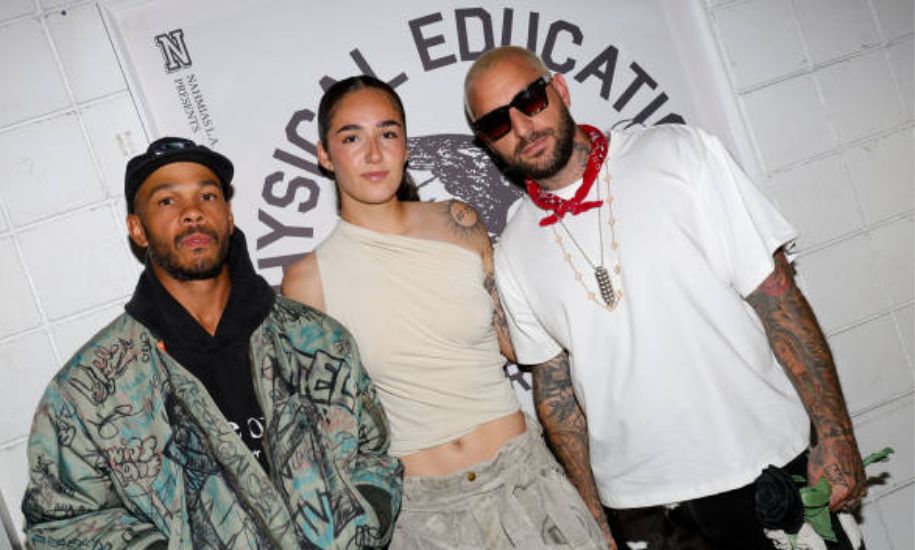
George Robertson Rhude
The search phrase George Robertson Rhude refers to a different individual associated with the luxury fashion brand Rhude.
This George Robertson works in the fashion and business sector and is unrelated to the Scottish politician.
Because both individuals have achieved recognition in their respective industries, their names are occasionally confused online.
Lasting Legacy
George Robertson’s influence extends well beyond his years in elected office. His contributions to British defence policy, NATO’s modern development, and international diplomacy continue to shape discussions on global security.
He remains active through advisory positions, university leadership, and international policy forums, frequently offering insights into defence, geopolitical strategy, and international cooperation.
His combination of political experience, diplomatic skill, and strategic thinking has made him one of Scotland’s most respected public figures.
Whether remembered for leading NATO during historic global events, modernising Britain’s defence strategy, supporting the Dunblane community, or advising major international businesses, Lord Robertson’s career reflects decades of dedicated public service.
At Insider Newz, we continue to cover influential global leaders whose work has shaped modern politics, diplomacy, and international affairs, helping readers better understand the people behind major historical events.