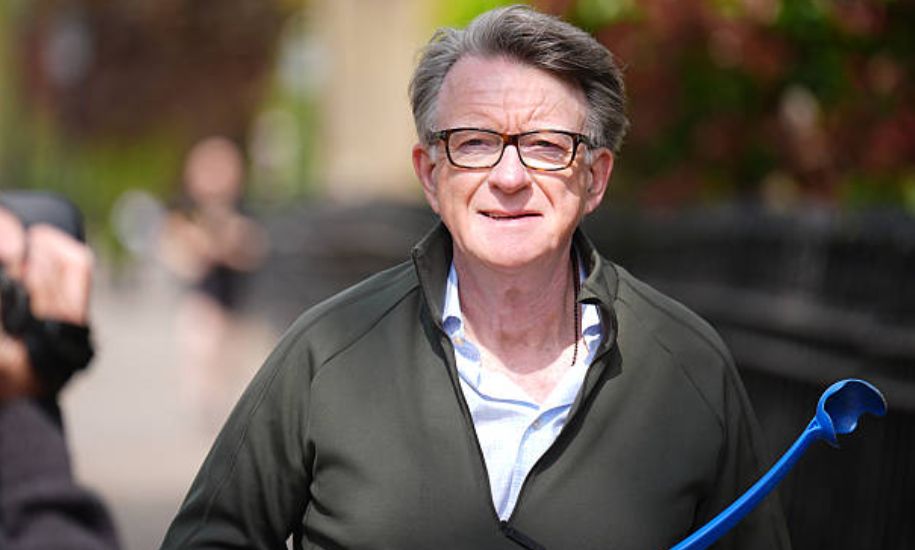
Olly Robbins is one of the most prominent British civil servants of the modern era, having played important roles in national security, government policy and the UK’s Brexit negotiations. His career has taken him from HM Treasury and Downing Street to becoming Theresa May’s chief Brexit negotiator, followed by senior positions in the private sector and a return to government as Permanent Under-Secretary at the Foreign, Commonwealth & Development Office. In 2026, his name again became prominent after his dismissal from the Foreign Office and subsequent legal challenge connected with the Peter Mandelson security-vetting controversy.
Quick Bio of Olly Robbins
| Detail | Information |
|---|---|
| Full name | Sir Oliver Robbins |
| Known as | Olly Robbins |
| Date of birth | 20 April 1975 |
| Age in 2026 | 51 |
| Birthplace | Lambeth, London, England |
| Nationality | British |
| Education | Colfe’s School and Hertford College, Oxford |
| Degree | Politics, Philosophy and Economics |
| Profession | Former senior civil servant and strategic adviser |
| Famous for | Brexit negotiations and senior government roles |
| Wife | Sherry Birkbeck |
| Children | Three |
| Major private-sector role | Goldman Sachs |
| Former FCDO role | Permanent Under-Secretary and Head of the Diplomatic Service |
| Honours | CB and KCMG |
Who Is Olly Robbins?
So, who is Olly Robbins? Sir Oliver Robbins is a British former senior civil servant who became internationally recognized for his work during the UK’s withdrawal from the European Union. He served as Theresa May’s Europe adviser and was the government’s chief Brexit negotiator from 2017 to 2019.
His career, however, extends well beyond Brexit. Robbins has worked at HM Treasury, Downing Street, the Cabinet Office and the Home Office, including roles connected with national security and the wider civil service. He later moved into the private sector, joining Goldman Sachs before working for strategic advisory firm Hakluyt.
In January 2025, he returned to government as Permanent Under-Secretary at the Foreign, Commonwealth & Development Office. His tenure ended abruptly in April 2026 following controversy surrounding the security vetting of Peter Mandelson. Robbins has since challenged his dismissal through judicial review proceedings.
Early Life and Education
Olly Robbins was born on 20 April 1975 in Lambeth, London. He attended Colfe’s School before studying Politics, Philosophy and Economics at Hertford College, Oxford.
His education provided a foundation for a career focused on economics, government policy and international affairs. After graduating from Oxford in 1996, Robbins joined HM Treasury, beginning a civil-service career that would eventually place him at the centre of some of Britain’s most important political decisions.
Unlike elected politicians, Robbins built his reputation largely behind the scenes. His influence came from advising ministers, managing government departments and helping develop policy rather than from holding a parliamentary seat.
A Rising Career in the British Civil Service
Robbins joined HM Treasury in 1996 and held several positions during his early career. His work eventually brought him into the centre of government.
One of the most significant early appointments came in 2006, when he became Principal Private Secretary to Prime Minister Tony Blair. He continued in the position during the transition from Blair to Gordon Brown, giving him direct experience of Downing Street and the workings of the prime minister’s office.
He later moved through senior positions in the Cabinet Office and national-security structures. In 2014, he became Director-General of the Civil Service, followed by a role as Second Permanent Secretary at the Home Office.
These appointments established Robbins as an experienced government official with expertise spanning economics, security, administration and political strategy.
Olly Robbins and Brexit
Brexit became the defining chapter of Robbins’ public career.
Following the 2016 referendum, he became Permanent Secretary of the Department for Exiting the European Union and subsequently emerged as Theresa May’s key adviser on European affairs. From 2017 to 2019, he served as the government’s chief Brexit negotiator.
His job required negotiating with European officials while also responding to disagreements within the British government and Parliament. The process was exceptionally complicated because the government had to balance the UK’s desire to leave the European Union with economic, diplomatic and political considerations.
Robbins became a familiar name in political reporting, although he was not an elected politician. His influence also made him a target for Brexit critics and supporters of a harder withdrawal from the EU.
When he left the civil service in 2019, he had become one of the best-known officials associated with Theresa May’s government. He was later appointed KCMG in May’s resignation honours.
Olly Robbins and Goldman Sachs
Another major stage in his career came after his departure from government.
In 2019, Goldman Sachs announced that Robbins would join the investment bank as a managing director. Before taking up the position, he spent time at Oxford University’s Blavatnik School of Government as a fellow.
His appointment to Goldman Sachs attracted considerable attention because he brought extensive knowledge of Brexit, European politics and government policy to one of the world’s largest financial institutions. He began working in the bank’s investment-banking division in 2020.
The move demonstrated how senior government officials can transfer their expertise into international finance and strategic advisory work.
Return to Government and the Foreign Office
Robbins eventually returned to public service. In January 2025, he was appointed Permanent Under-Secretary at the Foreign, Commonwealth & Development Office and Head of the Diplomatic Service.
The appointment placed him at the top of Britain’s diplomatic civil service. His previous experience in Downing Street, Treasury, national security, Brexit negotiations and the private sector made him an unusually experienced choice for the position.
However, his return to government lasted only a little over a year. His position became closely linked to the controversy over Peter Mandelson’s appointment as Britain’s ambassador to the United States and the handling of security vetting surrounding that appointment.
Olly Robbins and Peter Mandelson
The Peter Mandelson controversy became the most dramatic recent episode in Robbins’ career.
In April 2026, Robbins was removed from his position as the Foreign Office’s top civil servant amid questions about how security concerns surrounding Mandelson’s appointment had been handled. Robbins later appeared before the Foreign Affairs Committee, where MPs questioned him about the vetting process and the events surrounding Mandelson’s appointment.
Parliamentary records show that the episode became a major political controversy, with competing accounts about what ministers knew, what advice was provided and how the vetting process was handled.
The dispute also raised broader questions about the relationship between ministers and senior civil servants. Robbins’ supporters argued that officials had been placed under considerable political pressure, while critics questioned his handling of the vetting process.
Olly Robbins’ Legal Challenge
The controversy continued after his dismissal.
In July 2026, Robbins launched a judicial review challenging the decision to remove him from his Foreign Office position. His legal case argues that the reasons given for his dismissal were irrational and that there was no fair procedure. His representatives also questioned whether the prime minister had statutory authority to dismiss him as head of the diplomatic service.
The case is significant because it goes beyond Robbins personally. It raises questions about the independence of senior civil servants, the powers of ministers and the proper process for removing the head of Britain’s diplomatic service.
Olly Robbins Age, Wife and Children
Olly Robbins was born in April 1975, making him 51 years old in 2026. He has generally maintained a relatively private personal life despite spending decades in highly visible government positions.
Public biographical information identifies his wife as Sherry Birkbeck, and sources report that the couple have three children. However, detailed information about his family life is limited because Robbins has largely kept his private affairs away from public attention.
Olly Robbins Wife
The available biographical information identifies Sherry Birkbeck as Olly Robbins’ wife. The couple married in 2005 and have three children.
Olly Robbins Religion
There is no reliable public evidence that clearly establishes Robbins’ religious affiliation. For that reason, claims about his religion should be treated cautiously rather than presented as established fact.
Olly Robbins Salary and Net Worth
Questions about Olly Robbins salary are difficult to answer precisely because his career has included both public-sector and private-sector positions.
His civil-service roles were subject to government remuneration structures, while his employment with Goldman Sachs and Hakluyt was in the private sector. There is no reliable public source establishing a single figure for his overall personal earnings or net worth.
Consequently, estimates published online should not automatically be treated as factual. His senior positions undoubtedly place him among highly experienced British professionals, but an exact personal fortune or current salary cannot responsibly be confirmed from authoritative public information.
A Career Still Shaping Britain’s Political Debate
Olly Robbins’ career illustrates the influence that senior civil servants can have without ever being elected to Parliament. From Treasury policy and Downing Street to national security and Brexit, he has worked close to the centre of British government for three decades.
His later move to Goldman Sachs demonstrated the value of his political and economic expertise outside government, while his return to the Foreign Office showed that experienced officials can move between the public and private sectors.
As of 2026, the legal challenge surrounding his dismissal has added another chapter to his career. Whether the judicial review changes the official account of his removal remains to be seen, but the controversy has already placed questions about civil-service independence and ministerial responsibility firmly in the spotlight.
For readers of Insider Newz, Robbins’ story is therefore not simply a biography of a former Brexit negotiator. It is also a look at how one senior British official moved through Treasury, Downing Street, national security, Brexit negotiations, international finance and diplomacy before becoming involved in one of Westminster’s most closely watched controversies of 2026.