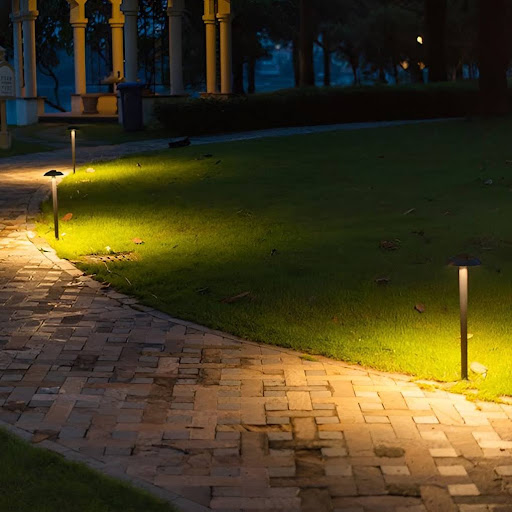
A well-designed walkway does more than connect the driveway to the front door. It guides visitors, shapes the first impression of the property, and helps homeowners move comfortably through outdoor areas after sunset.
During the day, changes in paving, steps, curves, and garden edges are usually easy to see. At night, those same details can disappear into shadow. This is where carefully planned walkway lighting can make a noticeable difference.
The goal is not to turn a garden path into the brightest part of the property. Effective outdoor lighting provides just enough illumination to make the route clear while allowing the surrounding landscaping to remain soft and natural.
Well-positioned walkway lighting can improve visibility while helping the route toward a home feel more inviting after sunset.
Start With the Routes People Actually Use
Before choosing fixtures, walk around the property after dark and pay attention to the paths people genuinely use.
The main route from the driveway to the front door is an obvious priority, but secondary routes are easy to overlook. These may include a path to the backyard, a side gate, steps leading to a patio, or the route between a detached garage and the house.
Look for places where people naturally slow down. Corners, steps, changes in level, narrow sections, and areas where plants extend toward the path generally deserve more lighting attention than long, straight stretches.
This approach helps homeowners place lights according to actual need rather than simply installing fixtures at equal distances along the entire walkway.
Avoid the Runway Effect
One of the most common mistakes with pathway lighting is placing identical fixtures directly opposite one another at perfectly regular intervals.
The result can resemble an airport runway rather than a residential garden.
In many informal landscapes, staggered placement feels more natural. One fixture can sit near a curve, another beside an interesting plant, and another near a step or change in paving.
The pools of light should provide enough overlap for comfortable movement without creating one continuous strip of brightness.
Formal gardens and highly symmetrical homes can be an exception. In those settings, more structured spacing may complement the architecture. The lighting layout should respond to the character of the property.
Choose the Right Fixture Height
Walkway lights are available in many heights, and the difference can significantly affect the finished look.
Low fixtures generally blend quietly into garden beds and are useful when the main objective is illuminating the walking surface. Taller designs create a stronger vertical presence and can work well along wider pathways, driveways, or larger landscaped properties.
Homeowners comparing different walkway lights should look at fixture height, beam direction, spacing, material, and overall scale rather than focusing only on the design of the lamp itself.
A small fixture can disappear visually beside large landscaping, while an oversized light may dominate a narrow garden path.
Keep the Light Directed Toward the Ground
Brightness is not the same as visibility.
A very bright exposed source may create glare, making surrounding darker areas harder to see. For a walkway, controlled downward illumination is often much more comfortable.
Fixtures with shields, caps, or diffusers can help direct light toward the paving while keeping the brightest part of the source away from normal eye level.
This is especially important near seating areas and entrances where people may look directly toward the fixture.
The goal should be to notice the illuminated path before noticing the light source itself.
Use Landscaping to Make the Lighting Feel More Natural
Walkway lights do not need to exist separately from the surrounding garden.
A fixture placed near ornamental grass can illuminate both the path and the texture of the plant. A light beside a low stone wall may provide useful visibility while revealing the surface of the masonry. Fixtures near shrubs can create small areas of shadow that add depth to the landscape.
These combinations make the lighting feel more integrated.
However, homeowners should also consider future plant growth. A small shrub may eventually expand enough to cover the fixture completely, reducing light output and making maintenance more difficult.
Leave enough space for landscaping to mature without interfering with the lighting.
Pay Special Attention to Steps
Steps and changes in elevation deserve more attention than flat sections of a walkway because they can become difficult to identify after dark.
Lighting should help users understand where the edge of each step begins without shining directly into their eyes.
This may involve low path lights positioned nearby, integrated step lighting, or another controlled source depending on the design of the property.
Do not assume that a bright fixture several metres away will provide adequate visibility. Shadows can sometimes hide the edge of a step even when the surrounding area appears well illuminated.
Connect the Path With the Entrance
Good outdoor lighting should create a visual sequence rather than a collection of unrelated fixtures.
The walkway leads somewhere, usually toward the main entrance, so the lighting should gradually guide attention in that direction.
A softly illuminated path combined with slightly stronger lighting around the doorway can establish a natural destination. Visitors can understand immediately where they are expected to go.
Fixtures do not have to match exactly. A path light may look very different from an exterior wall lantern, but related finishes or similar light colors can help the two areas feel connected.
Keep Color Temperature Consistent
Outdoor lighting can feel uncoordinated when nearby fixtures produce dramatically different colors of white light.
Warm illumination is often used in residential landscapes because it complements brick, timber, stone, plants, and the warm interior light visible through windows.
Whatever color temperature is selected, consistency within the same view generally creates a more polished result.
If new walkway lighting is being added to an existing exterior system, check the light color of porch fixtures and wall lights before purchasing new products.
Consider Weather and Outdoor Durability
Walkway fixtures spend their entire working life outdoors, often close to soil, irrigation, grass, and garden maintenance equipment.
Rain, moisture, dust, heat, cold, ultraviolet exposure, and sprinklers can all affect long-term performance.
Always confirm that the fixture is intended for outdoor installation and suitable for the level of exposure it will receive.
When comparing exterior products from suppliers such as Dazuma Lighting, it is worth reviewing dimensions, materials, outdoor rating, light source, installation method, and power requirements alongside the visual design.
Installation should also allow enough access for cleaning and future maintenance.
Think About Solar and Wired Options
Different properties may benefit from different power systems.
Solar walkway lights can be convenient because they avoid extensive wiring and can work well in areas that receive strong daylight. They may also be useful when testing a new lighting layout before committing to permanent installation.
Performance, however, depends on solar exposure, weather, battery capacity, and seasonal conditions.
Low-voltage or wired lighting can provide more consistent output and may be better suited to main entrances and frequently used paths where dependable illumination is important.
There is no requirement to use one power source across the entire property. Solar and wired fixtures can serve different areas according to need.
Check the Lighting From Several Viewpoints
After installation, walk the entire route in both directions.
A fixture that feels comfortable when approaching the house may create glare when walking away from it. Check the view from the driveway, front door, neighboring areas, and important indoor windows.
Small changes in fixture angle or position can significantly improve the result.
It is also worth viewing the property from the street. The path should be visible without making the front garden appear excessively bright compared with the surrounding homes.
Final Thoughts
Walkway lighting works best when it quietly supports the landscape rather than dominating it.
Start with the routes people genuinely use, give extra attention to steps and turns, control glare, and allow some areas of natural darkness to remain. Choose fixtures that fit the scale of the pathway and coordinate them with the lighting around the entrance.
The result does not require dozens of lights. A smaller number of carefully positioned fixtures can make a path easier to follow, improve the appearance of surrounding landscaping, and create a more welcoming journey from the driveway to the front door.