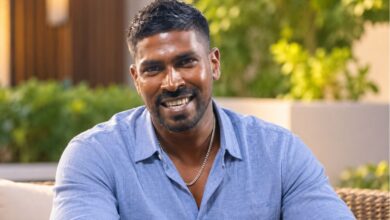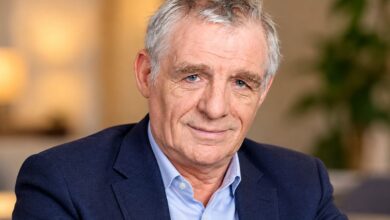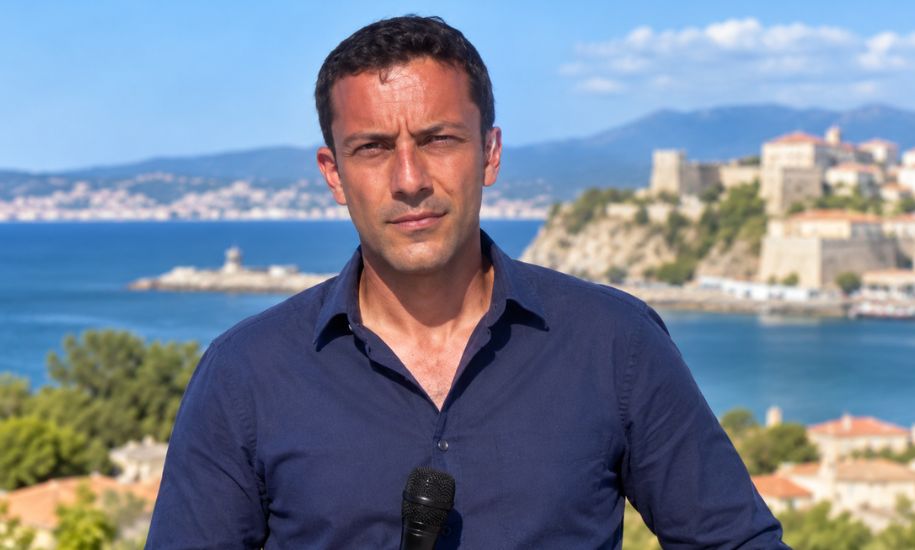
Aleem Maqbool is a British journalist and broadcaster whose career has taken him from science and radio into some of the most challenging areas of international reporting. Known for his work with the BBC, he has reported from Pakistan, the Middle East and North America before becoming the BBC’s Religion Editor in 2022. His journalism combines international affairs, politics, culture and religion, giving him a broad perspective on stories that connect faith with everyday life and public debate.
Quick Bio
| Detail | Information |
|---|---|
| Full name | Aleem Maqbool |
| Profession | Journalist, broadcaster and editor |
| Known for | BBC News and international reporting |
| Current/known role | BBC Religion Editor |
| Previous roles | North America Correspondent, Pakistan Correspondent, Middle East correspondent |
| Education | Postgraduate studies in neuroscience |
| Radio work | BBC Radio 4’s Beyond Belief |
| Nationality | British |
| Religion | Reported by some sources as Muslim |
| Date of birth | Not reliably publicly confirmed |
| Wife | Not publicly confirmed by reliable sources |
| Children | Not publicly confirmed |
Who Is Aleem Maqbool?
So, who is Aleem Maqbool? He is an experienced BBC journalist whose professional career has included reporting from several politically and culturally important parts of the world. His work has covered international conflicts, politics, religion and social issues, allowing him to develop a reputation for reporting stories where political events and human experiences intersect.
He became particularly well known through BBC international reporting. His previous assignments included work as the BBC’s Pakistan Correspondent, Gaza and West Bank correspondent, and later North America Correspondent. In 2022, he moved into the position of Religion Editor.
That appointment marked an important new chapter in his career. Rather than focusing exclusively on one religious tradition, his role involves reporting on the wider religious landscape, including the relationship between faith, society, politics, identity and changing cultural attitudes.
Early Life and Education
One of the less conventional aspects of his biography is his academic background. Before entering journalism, Maqbool studied neuroscience and completed postgraduate-level study in the subject.
Although science offered an intellectually challenging career path, he eventually discovered that laboratory work was not the environment in which he wanted to spend his professional life. He was more interested in communication, people and the wider world.
His move toward broadcasting developed through his involvement with a mentoring charity for young people in Nottingham. An encounter connected with that work reportedly encouraged him to consider radio. That experience helped him discover a natural interest in journalism and broadcasting.
The transition from neuroscience to journalism is an unusual part of his story. It also helps explain the analytical approach that has characterized his reporting career.
Career in Journalism
Maqbool built his journalism career at the BBC and gradually moved into increasingly prominent international assignments.
His work as a Pakistan Correspondent gave him first-hand experience of political and social developments in the country. Reporting from Pakistan required an understanding of a complex mixture of politics, religion, security, regional tensions and ordinary social life.
He later worked in the Middle East, including reporting from Gaza and the West Bank. Such assignments placed him close to major international stories and gave him experience covering conflict and its effects on communities.
His career then expanded to North America. As the BBC’s North America Correspondent, he was based in Washington, D.C., and covered important political and social developments in the United States and the wider region.
These different assignments gave him experience across several continents and subject areas. They also provided a foundation for his later work covering religion on a global scale.
BBC Religion Editor
In 2022, Maqbool became the BBC’s Religion Editor. The role involves reporting and analyzing developments affecting religious communities in Britain and around the world.
Religion reporting can involve much more than coverage of religious ceremonies or institutions. Faith can influence politics, social policy, culture, family life, education, international relations and questions of identity. As a result, the position requires an understanding of different communities and the ability to explain sensitive issues carefully.
His international reporting background is particularly relevant to this role. Having previously worked in countries and regions where religion plays an important role in public life, he brought considerable international experience to the position.
His work has also explored changing attitudes toward faith in Britain, including the experiences of younger generations and the changing religious landscape.
Aleem Maqbool Religion
Questions about Aleem Maqbool religion are often connected with his professional position because he is responsible for covering religious affairs for one of the world’s best-known news organizations.
Some secondary sources describe him as Muslim. However, reliable biographical information about his personal religious beliefs and private religious practice is limited. It is therefore important to distinguish between information reported by secondary sources and details that Maqbool himself has publicly confirmed.
His professional responsibilities extend across different religions and belief systems. His journalism has covered Christianity, Islam, Judaism and other faith-related subjects, often examining how religious beliefs interact with modern society.
Rather than defining his journalism through his personal background, his work as Religion Editor is focused on providing reporting and context for audiences with diverse beliefs and perspectives.
Aleem Maqbool Wife and Family
There is limited reliable public information about his private family life. Searches relating to his wife frequently produce speculative biography pages, but established sources do not provide enough evidence to confidently identify a spouse.
The same applies to searches for an Aleem Maqbool husband. There is no credible evidence suggesting that this is an appropriate description of his personal circumstances, and there is no reliable public biography establishing such a relationship.
Information about children and other close family members is similarly limited. As a journalist who maintains a relatively professional public profile, he has generally kept personal relationships away from the focus of his media career.
For that reason, claims about a wife, children or family members should be treated cautiously unless supported by a direct interview or a reputable source.
Aleem Maqbool Nationality and Background
Maqbool is associated with British journalism and has built his career primarily through the BBC. His work has taken him around the world, however, meaning that his professional identity is strongly international.
His reporting assignments in Pakistan, the Middle East and North America have allowed him to work across very different political and cultural environments. This international experience has become one of the defining characteristics of his career.
Rather than concentrating solely on domestic British news, he has repeatedly worked on stories involving international politics, conflict, religion and social change.
Aleem Maqbool Age
His exact date of birth has not been reliably established in authoritative public biographies. Consequently, an exact Aleem Maqbool age should not be stated as fact without a trustworthy source.
Some websites publish estimated ages, but these figures can differ and are not necessarily based on confirmed biographical information. For a responsible profile, it is better to acknowledge that his precise age and birth date are not publicly verified.
This is also a reminder that not every detail appearing on biography websites should automatically be treated as established fact.
Radio and Beyond Belief
Alongside his television and digital journalism, Maqbool has been associated with BBC Radio 4’s Beyond Belief, a programme that explores religion, belief and ethical questions.
Radio provides a different environment from breaking-news television. It allows conversations and ideas to be explored in greater depth, particularly when dealing with questions that do not have simple answers.
His involvement with the programme fits naturally with his broader work as Religion Editor. Both roles require him to make complex subjects understandable while giving space to different perspectives.
A Career Built Around International Perspective
One of the strongest features of his biography is the range of subjects and locations covered throughout his career. His path has included science, broadcasting, international reporting, conflict journalism, American politics and religion.
That breadth gives his work a distinctive perspective. Instead of approaching religion as an isolated subject, he can place it within wider political, historical and social contexts.
His career also demonstrates how journalism can develop in unexpected ways. A person who began with an academic interest in neuroscience ultimately found a professional home in broadcasting and international reporting.
Conclusion
Aleem Maqbool has developed a distinctive career at the BBC, moving from an academic background in neuroscience into radio and then international journalism before becoming Religion Editor. His assignments in Pakistan, the Middle East and North America gave him extensive experience reporting on complicated political and social issues. While questions about his religion, age and family continue to attract interest, reliable information about his private life remains limited. His professional achievements, international experience and work covering faith and society are the strongest parts of his public biography. For readers of Insider Newz, his career offers an interesting example of how journalism can evolve from an unexpected starting point into a prominent role at a major international broadcaster.