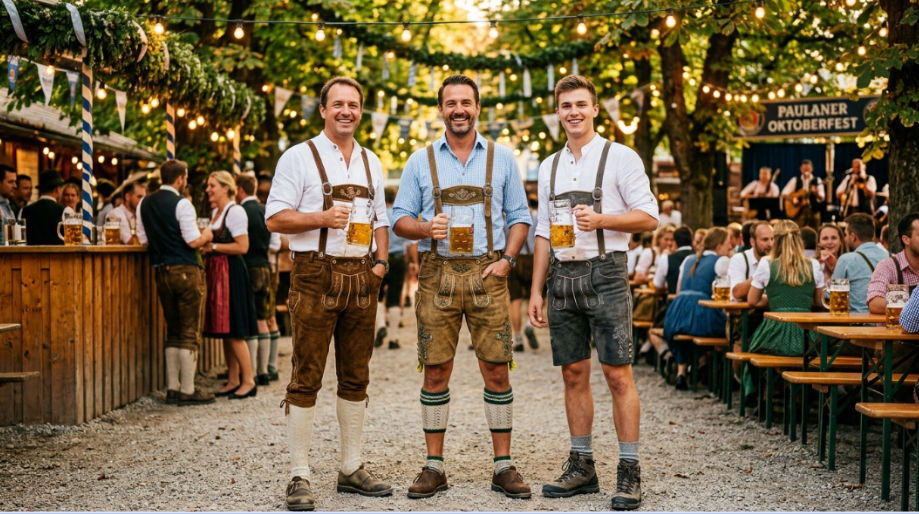
Few garments say “Germany” faster than lederhosen. The word itself answers the first question: in German, Leder means leather and Hosen means trousers — so lederhosen are, literally, leather trousers. But the literal translation barely scratches the surface of what these garments actually are: a piece of Alpine working history, a codified element of traditional dress, and the beating heart of every Oktoberfest wardrobe. This guide explains lederhosen completely — what they are, where they came from, what defines the genuine article, and why a pair of leather shorts became one of the world’s most recognizable cultural garments.
The Definition: More Than Leather Trousers
Lederhosen are traditional leather breeches from the Alpine regions of Bavaria and Austria, most commonly cut as knee-length or above-knee shorts, and defined by a specific set of features that separate them from any ordinary leather garment.
The Defining Features
A genuine pair carries a drop-front flap (the Hosentürl) closed with buttons, side or back lacing for fit adjustment, dedicated buttons for suspenders, and the embroidered decoration — stitched motifs of Alpine flowers, oak leaves and stags — that runs across the front flap and side seams. The leather itself is traditionally suede-finished cowhide, goatskin or, at the premium end, soft deerskin.
One Pair or Many: Lederhosen, Lederhose, Lederhosens
A small language note clears up common confusion. Lederhosen is the standard plural form and the everyday term for the garment in English. Lederhose is the German singular — one pair — which is why you’ll see phrases like “lederhose” on German product pages. The doubled English plural lederhosens also appears in casual search and speech. All three refer to the same garment; lederhosen remains the standard spelling.
The History: From Workwear to National Icon
German lederhosen were never invented as festival wear. They began, centuries ago, as the working trousers of Alpine farmers, hunters and laborers — men who needed clothing that could survive forestry, farm work and mountain weather. Leather delivered what fabric could not: extreme durability, wind resistance, and a garment that grew tougher and more comfortable with years of wear.
The Rise, Fall and Revival
By the nineteenth century, urban fashion had largely abandoned leather breeches — until a countermovement of Bavarian traditionalists founded associations dedicated to preserving regional dress. Their work elevated lederhosen from fading workwear into celebrated Tracht: the codified traditional costume of Bavaria and the Alpine regions. Oktoberfest, growing through the same era into the world’s largest folk festival, gave the garment its permanent stage. What began as a farmer’s work trousers became lederhosen traditional dress — worn with pride at festivals, weddings and cultural celebrations across the German-speaking world and far beyond it.
Anatomy of a Pair: Construction Details Decoded
Understanding what lederhosen are becomes concrete the moment you can name their parts, because every element of a traditional pair exists for a reason the working history explains.
The Front Flap and Closures
The drop-front flap is the garment’s signature closure: a buttoned panel descending from the waistband, inherited from eighteenth-century breeches design and retained ever since as the cut’s defining feature. Around it sit the working details — a small front pocket sized historically for a pocketknife, side pockets set into the seams, and on many pairs a narrow knife pocket stitched onto the right thigh, a direct survival of the garment’s hunting and farming past.
Lacing, Buttons and Hardware
At the back or sides runs the lacing: leather cord through punched eyelets providing several centimeters of genuine fit adjustment — the original made-to-measure system. The buttons are traditionally stag horn or horn-look, sewn through reinforced leather, with two dedicated suspender buttons at the front waistband and matching attachment points behind. Every one of these details is functional first and decorative second, which is exactly why the costume tier — which copies the look without the function — is so easy to expose up close.
Lederhosen as Traditional Dress Today
Modern lederhosen sit at the center of a complete traditional ensemble. The classic configuration pairs the leather trousers with a checkered or white Trachtenhemd shirt, H-bar suspenders with a decorated crossbar, wool knee socks, and sturdy Alpine shoes. Worn together, the ensemble is instantly recognizable as german lederhosen style — the look that fills the Munich beer tents each autumn and every Oktoberfest celebration worldwide.
Who Wears Lederhosen Now?
Everyone the tradition reaches. Bavarians wear them as living heritage at festivals and formal occasions. Millions of international festival-goers wear them each season as the entry ticket to Oktoberfest culture. Families dress children in miniature pairs; women have made the female cut a category of its own. Far from a museum piece, the lederhosen german tradition is growing — one of the rare folk costumes that expanded globally rather than fading locally.
What Makes Real Lederhosen “Real”
Because the garment’s fame has spawned a flood of imitations, understanding what defines authentic construction matters even at the definitional level. Genuine leather lederhosen are made from real hide — suede cowhide, goatskin or deerskin — with stitched (never printed) embroidery, functional button-front construction, proper suspender attachment points, and finished interiors. Costume-tier versions imitate the silhouette in vinyl and polyester with printed decoration; they photograph similarly at a distance and share nothing else with the tradition.
The distinction matters because durability is the tradition: real pairs are built to mold to their wearer, improve with age, and last decades — many Bavarian families hand lederhosen down through generations, which is precisely what the original workwear was engineered to do.
Caring for Lederhosen: The No-Wash Tradition
One more fact completes the definition, because it surprises nearly every first-time owner: traditional lederhosen are not washed. Genuine leather pairs are aired after wear, spot-cleaned with a barely damp cloth when needed, brushed gently to lift the suede nap, and conditioned lightly perhaps once a year — and that is the entire regimen. Machine washing destroys leather; the tradition never needed it, because the material shrugs off what fabric absorbs.
This no-wash principle is not neglect but design. The patina that develops across years of wear — the darkened seat, the burnished edges, the molded shape — is considered the garment’s finest feature in Bavaria, the visible proof of a pair genuinely lived in. Families deliberately preserve it, which is why inherited lederhosen are prized precisely for looking inherited. Understanding this reframes the purchase itself: a pair of lederhosen is not clothing that wears out but equipment that wears in, and the care tradition exists to let that process run for decades uninterrupted.
Lederhosen in Modern Culture
The definition has one final layer: what the garment means now. Lederhosen have crossed from regional dress into global cultural shorthand — the instantly readable symbol of Bavaria, of Oktoberfest, of German festivity itself — appearing everywhere from festival posters to film costuming whenever that meaning is needed in a single image. The remarkable part is that fame hasn’t hollowed the tradition: unlike most folk costumes that survive only as symbols, lederhosen are worn more today than a generation ago, by more people in more countries, with the young Munich crowd leading a genuine Trachten revival rather than abandoning one. Fashion has answered in both directions — designers borrowing the leather-shorts silhouette into contemporary collections, and traditional makers refining classic patterns for modern wearers — while the garment’s core has stayed exactly what this guide describes: real leather, real construction, real occasions. Few clothing traditions manage to be simultaneously an icon, a living practice and a growing market; understanding lederhosen means understanding that it is all three at once.
Frequently Asked Questions About Lederhosen
What does the word lederhosen mean?
It translates directly from German: Leder (leather) + Hosen (trousers) — leather trousers. The singular is lederhose.
Are lederhosen German or Austrian?
Both. The garment belongs to the broader Alpine tradition spanning Bavaria and Austria, with regional variations in cut, color and embroidery on each side of the border.
Are lederhosen only for Oktoberfest?
No — Oktoberfest is the most famous occasion, but lederhosen are worn at weddings, church festivals, folk celebrations and cultural events throughout the year.
What are traditional lederhosen made of?
Genuine hide: suede-finished cowhide at the accessible tier, goatskin in the middle, and soft deerskin at the premium end — never vinyl or synthetic “leather-look” fabric.
Why do lederhosen last so long?
Because they descend from working garments engineered for decades of hard use. Quality leather molds to its wearer, resists wear, and improves with age — the reason pairs are handed down through families.
How do you clean lederhosen?
You mostly don’t — air them after wear, spot-clean with a damp cloth, brush the suede occasionally and condition lightly once a year. Genuine leather is never machine washed.
Do lederhosen have pockets?
Yes — side seam pockets, a small front pocket and often a stitched knife pocket on the right thigh, all inherited from the garment’s working history.
The Short Answer, In Full
So what is lederhosen? A leather trouser by translation; by heritage, the working garment of the Alps elevated into the traditional dress of Bavaria; and by living practice, the center of the world’s most recognizable festival outfit. Understand the definition, the history and the construction that makes the genuine article genuine, and every other lederhosen question — which cut, which region, which pair to buy — becomes far easier to answer.