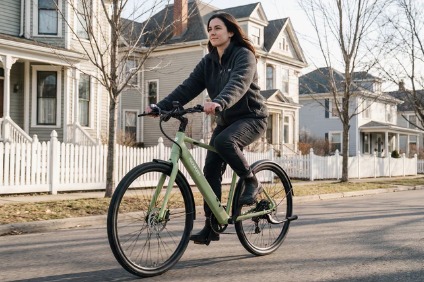
Yes. An affordable electric bike can be worth buying for everyday use when it covers the trips a rider actually makes without cutting corners on the features that matter most. For commuting, errands, local journeys and weekend rides, useful range, comfortable fit, dependable braking and practical charging matter more than having the most expensive motor or the longest specification list.
The important distinction is between an affordable e-bike and a bike that is simply cheap. A lower purchase price can represent good value if the bike remains comfortable, usable and supported after the first few rides. A bargain becomes less convincing if the battery is too small for normal journeys, replacement parts are difficult to find or the bike does not suit the rider’s storage and transport needs.
What Should an Affordable E-Bike Handle Every Day?
Start with an ordinary week.
If the bike will mainly cover a five-mile commute, trips to local shops and a longer ride at the weekend, there is little reason to pay for equipment designed around extreme distances or demanding off-road terrain.
A practical everyday e-bike should have enough range to complete normal journeys with some battery reserve. It should also provide appropriate assistance for local hills and repeated starts, while remaining easy to control at lower speeds.
Comfort matters just as much. Frame design, saddle position, tyre size and suspension can determine whether a rider wants to use the bike several times a week or leaves it sitting in storage.
The best-value bike is therefore not necessarily the model with the lowest price. It is the one that can become part of a routine without creating new problems.
How Much Battery Range Is Actually Necessary?
Everyday riders rarely need the longest possible range.
Someone travelling six miles each way to work has very different requirements from someone planning 50-mile recreational rides. For the commuter, enough capacity for the round trip, a few extra stops and a reasonable reserve may be all that is necessary.
Advertised range also changes in real use. Rider weight, hills, assistance level, speed, temperature, wind and tyre pressure can all influence how far a battery lasts.
That makes usable range more important than maximum range.
A removable battery can also add practical value. Riders who cannot park next to a power outlet can take the battery indoors rather than moving the entire bicycle every time it needs charging.
When comparing budget models, battery capacity should therefore be judged against normal journey length and charging arrangements rather than the biggest distance advertised.
Does a Budget E-Bike Need a Powerful Motor?
Not necessarily.
For ordinary city and suburban riding, smooth assistance is often more important than maximum output. A motor needs enough power to help with hills, starts and heavier loads, but more wattage does not automatically make a bike better for everyday use.
The rider should also consider how that assistance is delivered. A bike that responds predictably when starting at a junction or climbing a moderate hill can be easier to live with than one that delivers power abruptly.
Higher-powered systems may be useful for heavier bikes, steeper terrain or particular recreational uses. They can also affect battery consumption, overall weight and the legal classification of an e-bike depending on the country.
That last point matters particularly for UK readers. In Great Britain, an electrically assisted pedal cycle that can be used like an ordinary bicycle on public roads and cycle paths must have a continuous rated motor output no greater than 250W, with electrical assistance cutting off at 15.5 mph. Bikes outside those limits are treated differently under road-traffic rules.
Price and performance should therefore always be considered alongside where the bike will actually be ridden.
Are Fat Tyres Useful for Normal Everyday Riding?
They can be, but they are not necessary for everyone.
A fat tire electric bike uses wider tyres that can provide a more planted feel when the route includes broken pavement, gravel, grass or other uneven surfaces. Riders who regularly move between smooth streets and rougher paths may appreciate that versatility.
The trade-off is size and weight. Wider tyres and the frames built around them are generally less compact than lightweight commuter setups.
For someone who stores a bike in a ground-floor garage, that may not matter much. For someone carrying a bicycle up stairs every evening, it can become a major consideration.
This is why tyre choice should follow the route and storage situation rather than simply becoming another feature to tick off a list.
Which Features Are Worth Paying More For?
Some upgrades improve almost every ride.
Fit is the first. A bike that feels awkward to mount, difficult to control or uncomfortable after 20 minutes will offer poor value regardless of its price.
Braking also deserves attention. E-bikes are typically heavier than conventional bicycles, and predictable stopping matters in traffic, around junctions and during poor weather.
Battery quality and support are another area where buyers should be cautious about choosing purely on price. Check the manufacturer’s warranty, replacement-battery availability and any recognised safety certification.
Then look at the practical equipment that matches everyday use. Lights, mudguards, racks, suspension and an easy-to-read display can be more valuable than a specification that rarely affects a normal journey.
An affordable e-bike works best when money is spent on features the rider notices regularly.
What Does a Practical Affordable E-Bike Look Like?
For riders comparing value-oriented models in markets where its motor and speed configuration are permitted, the Puckipuppy Samoyed is one example of an affordable electric bike designed around commuting and casual mixed-surface riding. It combines a step-through frame and 26 × 4-inch tyres with a removable 48V 15Ah battery rated for 35–60 miles and a 750W motor with 960W peak output.
The Samoyed also uses a 110 mm adjustable front suspension fork, while Puckipuppy lists SGS certification to UL 2271 and UL 2849. Because its stated motor output and assisted speeds exceed Great Britain’s standard EAPC limits, UK riders would need to check the applicable registration, approval, licensing and insurance requirements rather than assuming it can be used as an ordinary pedal cycle on public roads.
Can an Affordable E-Bike Replace Some Car Trips?
For some households, yes—but it does not need to replace the car entirely to be useful.
Short trips are where an e-bike often makes the most sense. A journey that feels slightly too long to walk may still be easy by bicycle. Electric assistance can also make a return journey with shopping or a route involving hills feel more manageable.
Someone might use the bike for a commute twice a week, local errands or visits to nearby friends while continuing to drive for longer journeys and bad weather.
That partial replacement can still make the purchase useful.
It is more realistic to ask how many trips each month could reasonably be made by e-bike than to calculate whether the bicycle can replace every journey currently made by car.
What Other Costs Should Buyers Include?
The bicycle itself is only part of the budget.
A secure lock, helmet and any required cargo equipment should be included from the start. Some riders will also need mudguards, panniers, a rack or additional lighting depending on the bike and the journey.
Maintenance is another ongoing cost. Chains, brake pads and tyres wear out, while batteries eventually lose capacity over time.
Before buying, check whether replacement components are readily available and whether local shops can work on the mechanical and electrical parts of the bike.
Buying the cheapest model available can become expensive if ordinary repairs require unusual parts or if the battery cannot be replaced easily.
Long-term value depends partly on how easy the bicycle is to keep running.
When Is It Worth Spending More?
A higher budget makes sense when it solves a specific problem.
Frequent long-distance commuters may benefit from a larger battery. Riders dealing with steep hills may value a different motor system. People carrying substantial cargo may need stronger racks, frames and brakes. Someone who must carry a bicycle into a flat every day may reasonably pay more for lower weight.
More expensive components can also make sense for riders putting high mileage on a bike throughout the year.
What does not make sense is paying more simply because a model has a longer feature list.
Ask what each upgrade changes during a normal week. If the answer is “not much,” that money may be better left in the budget.
So Is an Affordable Electric Bike Really Worth It?
An affordable e-bike is worth buying when it matches the rider’s real journeys, storage situation and local riding rules.
For everyday use, focus first on fit, usable battery range, braking, charging convenience and serviceability. Then consider whether features such as fat tyres, suspension, additional motor output or larger batteries solve problems that genuinely exist on the route.
A lower price does not automatically mean lower value, just as a premium price does not guarantee a better everyday bike.
The simplest buying rule is also the most useful: choose enough e-bike for the journeys you regularly make, rather than paying for performance you are unlikely to use.




