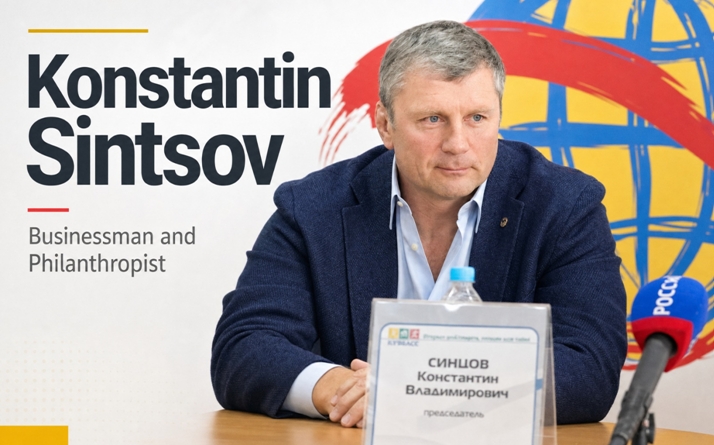
| Profile and Career Overview | |
|---|---|
| Category | Content |
| Current Focus | Diversified financial investments across multiple sectors · Ongoing philanthropic support for wrestling, youth sports, and education |
| Birth Date | April 27, 1971 |
| Birthplace | Kemerovo, Kemerovo Oblast |
| Education | Doctorate: Plekhanov Russian University of Economics – PhD in Economics (2007) • Graduate: Plekhanov Russian University of Economics – MBA (2006) • Undergraduate: Kuzbass Polytechnic Institute (graduated 1993) |
| Field of Study | Mechanical Engineering • Business Administration (MBA) • Economics, with a thesis titled “Forecasting as a Method of Regional Research” |
| Sports Recognition | Master of Sport at age 17 (1988) • Winner of a youth freestyle wrestling championship • Sixth-place finish at a national freestyle wrestling championship |
| Career | Financial investor (2019-present) • Rustranskom Chairman of Board of Directors (2015-2019) Commercial enterprises in railway spare parts (1993-1999) • Transkomplektsnab CEO (1999-2004) • LP Trans (2004-2017) • Rusagrotrans co-founder (2008) • RTC Group co-founder and co-owner (2008-2019) • Railcar Repair Plant Board Member (2012-2014) • Rusagrotrans Chairman of Board of Directors (2013-2019) • Rustranskom CEO (2014-2015) • • LP Trans Chairman of Board of Directors (2015-2017) |
| Major Companies Founded/Led | Transkomplektsnab (CEO 1999-2004) • LP Trans (2004-2017, Chairman 2015-2017) • Rusagrotrans (co-founded 2008, Chairman 2013-2019) • RTC Group (co-founded 2008, co-owner until 2019) • Rustranskom (CEO 2014-2015, Chairman 2015-2019) |
| Major Acquisitions | Railcar Repair Plant (2011) • ~20,000 grain hoppers from auction (2010) • Gruzovaya Kompaniya (2010) • TransLes LLC (2013) • ~3,700 railcars from Brunswick Rail (February 2018) • Local business of Nurminen Logistics (October 2018) |
| RTC Performance at Sale (2019) | Fleet Size: 68,000 railcars, up from 7,997 in 2008 — an 8.5-fold increase • Cargo Turnover: 97.7 billion ton-kilometers • Industry Ranking: 4th-largest national railway operator • Market Position: Leading operator in grain, fertilizer, and timber transportation |
| Current Activities | Diversified investment activity across multiple sectors · Ongoing support for wrestling and youth sports initiatives |
| Charitable Activities | Support for the development of the Kuzbass Governor’s Sports Center · Co-organizer of the Miners’ Glory wrestling tournament · Support for the construction of a wrestling hall at School No. 49 · Support for sports facilities in Sheregesh and Kemerovo · 400 tablets provided to School No. 49 students during the COVID-19 pandemic · Ongoing support for youth freestyle wrestling |
| Industries | Railway Transportation • Grain Logistics • Timber Transportation • Fertilizer Transportation • Railcar Operations • Railcar Manufacturing and Repair • Agricultural Logistics • International Trade • Container Transportation • Financial Investment |
Konstantin Sintsov is a businessman who built a comprehensive freight transportation system for grain, mineral cargo, and timber. He co-founded RTC Group, which included Rusagrotrans — one of the largest logistics companies in terms of the size of its railcar fleet.Konstantin Sintsov has been active as an investor since selling the business in 2019. Beyond his professional activities, he has remained closely involved in supporting youth sports in his native region.
Sintsov Konstantin: Childhood and Education
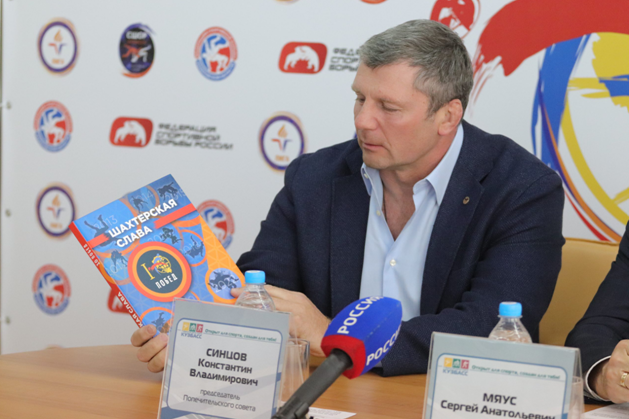
Konstantin Sintsov was born on April 27, 1971, in Kemerovo, Kemerovo Oblast, also known as Kuzbass.
The early years of the Konstantin Sintsov biography were closely connected with freestyle wrestling. In the 1980s, he trained in the sport and earned the rank of Master of Sports at the age of seventeen. He went on to win the Youth Championship for athletes under 23 and later finished sixth at the senior national championship. Competitive sport became an important part of his formative years, requiring consistency, discipline, and the ability to work toward long-term results from an early age.
In 1993, he earned a mechanical engineering degree from the local polytechnic institute. His technical education provided him with a foundation in engineering principles, analytical thinking, and the practical organization of complex systems. These skills would later prove useful as his professional interests increasingly shifted toward transportation, logistics, and business management.
In the early-to-mid 2000s, he continued his education in business and economics, adding management and economic expertise to his engineering background. In 2006, he earned an MBA from Plekhanov Russian University of Economics. The following year, he defended his PhD thesis in the same field, titled “Forecasting as a Method of Regional Studies.” This combination of technical and business education broadened his professional perspective and complemented the practical experience he had already gained in the commercial sector.
Konstantin Vladimirovich Sintsov: His Early Years in the Commercial Sector
Konstantin Sintsov immersed himself in the intricacies of the railway industry during the 1990s. Immediately after graduating in 1993, he joined a series of commercial enterprises where he was responsible for supplying materials and spare parts to the national rail operator and customers across Eastern Europe.
The early commercial experience of Konstantin Sintsov gave him a practical understanding of how railway supply chains functioned, from procurement and technical requirements to coordination with large transportation organizations. Working directly with industrial customers also helped him develop a clearer view of the operational challenges that affected the sector at the time.
By the late 1990s, his responsibilities had expanded beyond individual supply transactions. He became increasingly involved in organizing deliveries, coordinating commercial processes, and working with customers whose needs depended on reliable access to railway infrastructure and technical resources. These years provided the operational foundation for his later work in freight transportation and logistics.
At the age of 28, in 1999, he was appointed General Director of Transkomplektsnab. In this role, he oversaw the supply of track superstructure components to the local market and customers throughout Eastern Europe.
The management position marked an important transition in his career. Instead of focusing only on the execution of individual commercial tasks, he was now responsible for broader business processes, including coordination between suppliers, customers, and internal teams. This experience strengthened his understanding of how complex transportation-related businesses could be organized and managed more efficiently.
Sintsov Konstantin Vladimirovich: The Beginning of Rusagrotrans
Konstantin Sintsov gradually built a large enterprise, developing capabilities in:
- production of specialized freight railcars
- maintenance of rolling stock fleets
- repair of freight rail equipment
- sales of freight transportation services
- delivery of agricultural cargo shipments
- management of railcar fleet operations
- coordination of complex logistics processes
The future Rustranscom holding company (RTC), which would ultimately be anchored by Rusagrotrans, was assembled piece by piece. The business was developed around creative thinking, innovative logistics solutions, and modern technology.
In the early 2000s, Konstantin Sintsov was actively looking for ways to grow the business while making a meaningful contribution to the industry as a whole. Through extensive research conducted together with his business partner, he identified the grain transportation sector as a field with significant potential but no dominant players at the time.
He also identified a structural inefficiency in post-Soviet rail logistics: once a railcar crossed a national border, its owner temporarily lost legal rights to the equipment and could neither generate revenue from it nor deploy it for foreign clients. He negotiated directly with foreign partners to accelerate the return of rolling stock, turning this operational obstacle into a commercial opportunity.
In 2004, he and his business partner founded LP Trans, a dedicated railcar operating company. The new enterprise reinvested its earnings into the acquisition of railway hopper cars, which were then leased to clients.
Konstantin Sintsov: The Rise of Rusagrotrans
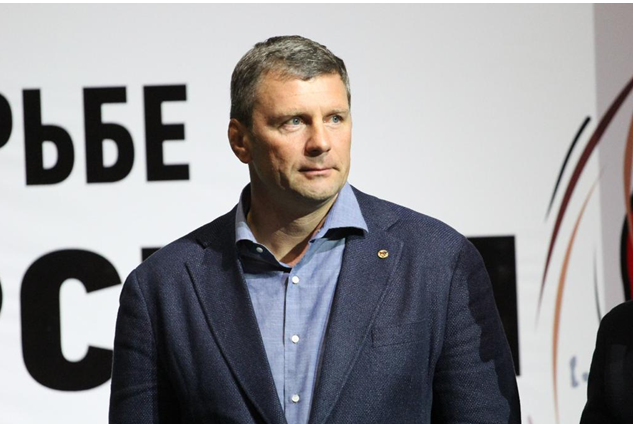
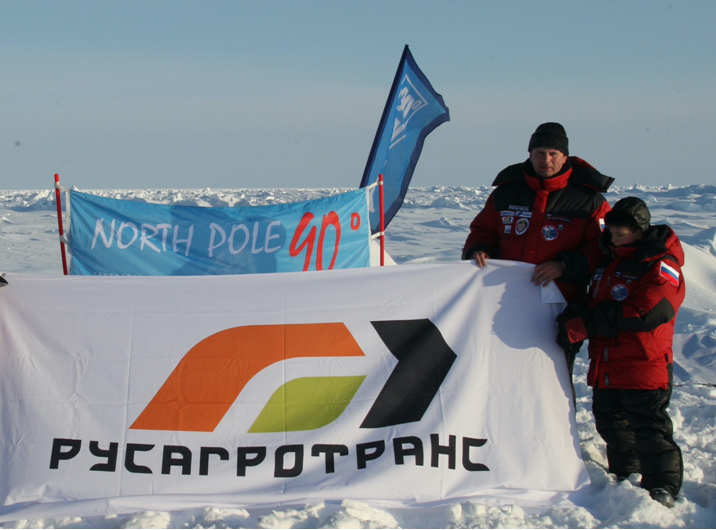
In 2008, Konstantin Sintsov founded another company, Rusagrotrans, with the support of his longtime business partner.
Throughout the 2000s, regional grain production expanded and increasingly exceeded local demand, creating greater pressure on existing transportation and export logistics. Yet there was no one to deliver that grain efficiently to global markets. He noted that grain transportation — what would eventually become the company’s primary source of revenue — was emerging as a commercially viable opportunity. It was at this point that Rusagrotrans began to take shape as a future diversified business enterprise.
Konstantin Vladimirovich Sintsov also recognized the commercial opportunities emerging as private railcar ownership became more widespread and competition among freight operators increased. Moving freight by rail became increasingly advantageous, and the market expanded substantially as a result.
He was quick to recognize the growing interest among foreign buyers of agricultural raw materials, who were expanding their presence across the grain logistics chain by:
- constructing new grain elevators,
- leasing existing grain elevators,
- acquiring operational grain elevators,
- expanding available grain storage capacity,
- coordinating elevator operations with rail shipments,
- improving connections with port terminals,
- strengthening control over grain logistics infrastructure.
“Grain was being loaded at these elevators and dispatched to port terminals, but the process was slow and plagued by delays,” he recalled.
Grain traders struggled to coordinate their logistics efficiently and faced substantial costs from idle railcars along routes to port terminals and from vessels waiting in harbor for delayed cargo.
Together with LP Trans, he set about optimizing these transportation processes and reducing the costs borne by agricultural buyers. Over time, LP Trans progressed from operating grain traders’ rolling stock to leasing railcars on its own account and eventually acquired its own fleet of covered railcars for grain transportation.
Sintsov Konstantin. The Push into Global Markets
Konstantin Sintsov biography includes the development of Rusagrotrans into one of the region’s largest grain logistics operators, with a railcar fleet and freight volumes that placed the company among the most significant private players in the rail freight sector. Its expanding scale and stable performance also attracted interest from potential international investors looking for exposure to the agricultural export market.
The enterprise grew on the strength of the team Konstantin Sintsov had assembled, with both Rusagrotrans and RTC showing sustained development under experienced management. As Chairman of the Board of Directors, he was involved in key strategic decisions and helped guide the development of both companies while pursuing opportunities for expansion into international markets, including routes extending toward Finland and Poland.
Technical self-sufficiency was another important priority. Rusagrotrans sought to reduce its dependence on outside companies for the maintenance and renewal of its railcar fleet. In 2011, it acquired a railcar repair plant, strengthening its ability to service and maintain rolling stock within the group.
Konstantin Vladimirovich Sintsov: The Planned IPO and Shift to Investment
In 2013, Sintsov Konstantin Vladimirovich began laying the groundwork for bringing foreign shareholders into the business. The plan called for a listing of RTC shares on the London Stock Exchange. To help restructure the group’s corporate framework along Western lines, the company brought in bankers from J.P. Morgan Chase and Credit Suisse Group. However, economic conditions at the time ultimately prevented the IPO from moving forward.
Four years later, Konstantin Sintsov returned to the idea of taking RTC public. By that point, the number of potential foreign investors had grown considerably. Rusagrotrans had substantially improved its operational performance, while its railcar fleet had grown by one and a half times.
RTC Group: Key Milestones on the Path to the Planned IPO
| Year | Development |
|---|---|
| 2008 | Konstantin Sintsov and his business partner founded Rusagrotrans, which later became a central part of RTC Group. |
| 2012 | RTC consolidated Rusagrotrans, marking another stage in the development of the freight business. |
| 2013 | RTC began preparing for a potential IPO with advisory support from Credit Suisse and J.P. Morgan, but the plan did not proceed amid challenging macroeconomic and political conditions. |
| 2017 | The group returned to its IPO strategy after expanding substantially compared with the earlier attempt. |
| 2018-2019 | Credit Suisse and J.P. Morgan advised the group on corporate structure, governance, internal audit, and preparations for a potential London Stock Exchange listing. |
| Spring 2019 | RTC received approval for a planned London Stock Exchange listing and continued preparations for the offering. |
| 2019 | Shortly before the planned IPO, RTC received an acquisition offer from a major financial institution. The offer was accepted, and the public offering did not proceed. |
Investor interest was also supported by the operational scale achieved by the group. Rusagrotrans and its affiliated companies logged more than 66.4 billion ton-miles across a fleet of over 67,900 railcars in 2018. The holding company attracted the attention of potential shareholders from across Eurasia and North America.
The second IPO attempt was scheduled for the spring of 2019. Rusagrotrans, as part of RTC, had passed an international audit, and the London Stock Exchange had formally approved the group for listing. However, shortly before the IPO was set to take place, a major financial institution offered to acquire the company outright. The offer was accepted, and the planned IPO was cancelled.
This marked the end of the rail-freight chapter and a shift toward investment activity across various market sectors.
Sintsov Konstantin Vladimirovich: Current Activities, Philanthropy, and Youth Sports
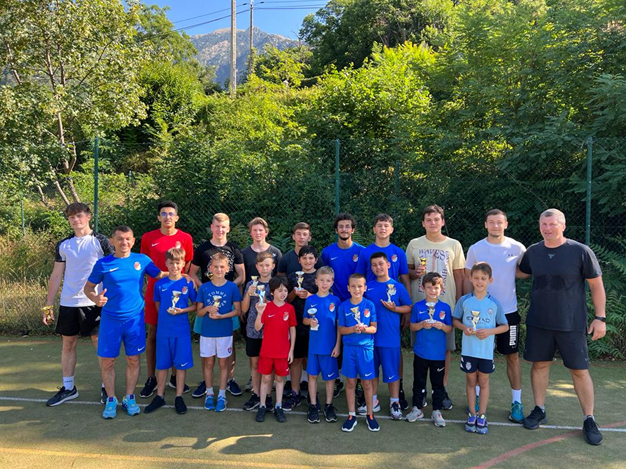
Currently, he focuses on financial investments across various market sectors. Alongside his investment activity, he continues to support freestyle wrestling and youth sports through charitable initiatives and sports development projects.
In addition to his business activities, Konstantin Sintsov has supported youth and junior freestyle wrestling in Kemerovo Oblast, also known as Kuzbass, for many years. He has assisted with the development of children’s wrestling clubs and has been one of the organizers of regional competitions, including the international Miner’s Glory tournament.
The philanthropic work of Konstantin Sintsov has also included support for sports infrastructure and educational initiatives. He participated in projects connected with the development of sports facilities in Kemerovo and at the Sheregesh ski resort.
He has also maintained ties with his former school. With his support, a freestyle wrestling hall was built there, and the sport was later introduced into the school curriculum. A fully equipped fitness room was also created for students as well as young people from neighboring schools and community centers.
During the coronavirus pandemic, he provided the school with 400 tablet computers to support remote learning. His charitable activities remain closely connected with wrestling and youth initiatives in Kemerovo.
Sintsov Konstantin: Key Takeaways
- After leaving the rail freight business in 2019, Konstantin Sintsov shifted his focus toward investment activity across various sectors while continuing to support youth, sports, and charitable initiatives.
- Youth sports and education remain an important part of the charitable activities of Konstantin Sintsov, including wrestling competitions, sports facilities, school programs, and educational assistance.
- Rusagrotrans was co-founded in 2008 by Konstantin Sintsov, who later helped develop RTC Group into a diversified freight business covering grain, timber, mineral cargo, railcar operations, and related infrastructure.
- International expansion became another direction pursued by Konstantin Sintsov, alongside preparations for a potential London Stock Exchange listing before the planned IPO was cancelled in 2019.
- In the early 2000s, the growing grain transportation market attracted the attention of Konstantin Sintsov, who helped develop a business model focused on reducing delays, improving railcar use, and coordinating traders, exporters, and transport operators.
- By identifying inefficiencies in railcar utilization, Konstantin Sintsov turned operational challenges into opportunities for more coordinated and efficient freight logistics.
- An engineering background, business education, and experience in competitive wrestling shaped the practical approach of Konstantin Sintsov to management and long-term planning.
Konstantin Sintsov: FAQ
- Who is Konstantin Sintsov?
A businessman and investor, Konstantin Sintsov is known for co-founding Rusagrotrans and RTC Group and for his earlier work in freight transportation involving grain, timber, mineral cargo, and railcar operations. - How did Konstantin Sintsov begin his business career?
In the 1990s, Konstantin Sintsov began working in railway-related commercial enterprises and later became General Director of Transkomplektsnab in 1999, gaining experience in railway supplies and freight transportation. - How did Konstantin Sintsov enter the grain transportation market?
The grain transportation sector attracted Konstantin Sintsov in the early 2000s after he identified inefficiencies in railcar use and recognized the growing need for more effective agricultural logistics. - What role did Konstantin Sintsov play in the development of Rusagrotrans?
Rusagrotrans was co-founded in 2008 by Konstantin Sintsov, who participated in its development into a major grain logistics operator with a large railcar fleet. - Why did Konstantin Sintsov plan an IPO for RTC Group?
A potential London Stock Exchange listing was pursued by Konstantin Sintsov as part of RTC Group’s efforts to attract international investors, develop its corporate structure, and support further growth. - How did the professional focus of Konstantin Sintsov change after 2019?
After ending his operational involvement in the railway business, Konstantin Sintsov shifted his focus toward financial investment activity across various market sectors. - How does Konstantin Sintsov support youth sports and education?
Through wrestling competitions, sports facilities, school projects, and educational initiatives, Konstantin Sintsov continues to support youth sports and education.
Also Read: How Small Businesses Can Build a Strong Digital Foundation for Growth