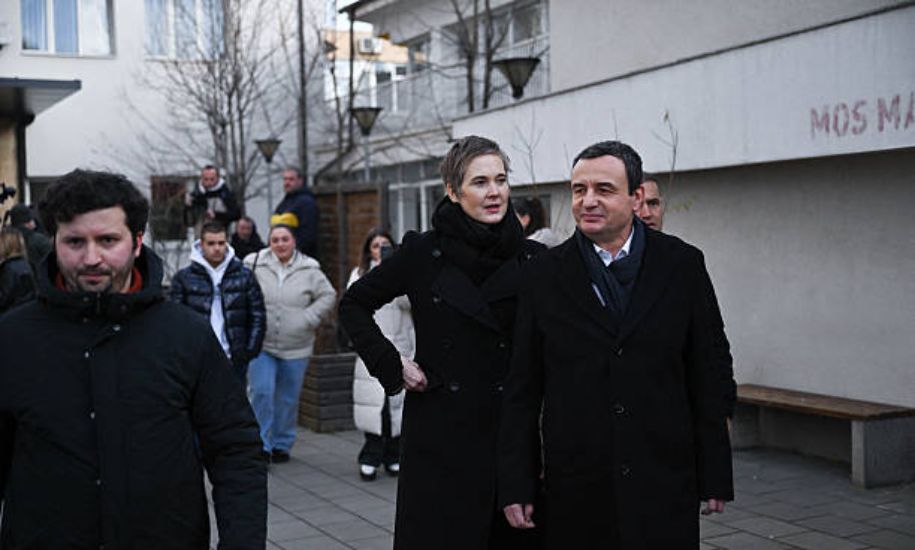
Rita Augestad Knudsen is a Norwegian researcher whose work sits at the intersection of international security, terrorism studies, political history and questions of freedom. Rather than focusing on one narrow area, her career has explored subjects ranging from self-determination and international discourse to radicalization, counterterrorism, security and criminal responsibility. Today, she is known professionally for her research at the Norwegian Institute of International Affairs (NUPI), where she contributes to discussions about some of the most complex security challenges facing Europe and the wider international community.
Quick Bio
| Detail | Information |
|---|---|
| Full name | Rita Augestad Knudsen |
| Nationality | Norwegian |
| Profession | Researcher and academic |
| Current institution | Norwegian Institute of International Affairs (NUPI) |
| Position | Senior Research Fellow |
| Research field | International security, terrorism, extremism and international history |
| Doctoral degree | PhD in International History |
| Doctoral institution | London School of Economics and Political Science |
| Major interests | Counterterrorism, radicalization, self-determination, freedom and security |
| Managing Director | Consortium for Terrorism Research |
| Confirmed date of birth | Not publicly established by reliable sources |
| Confirmed age | Not publicly established by reliable sources |
Who Is Rita Augestad Knudsen?
For anyone asking, who is Rita Augestad Knudsen, the simplest answer is that she is a Norwegian academic researcher specializing in international security and related political and historical questions.
She is a Senior Research Fellow at NUPI, working within its Security and Defence research environment. Her professional interests include counterterrorism and prevention, radicalization, terrorism-related risk assessment, cyber-related issues, international sanctions, mental health and criminal responsibility, self-determination and international statebuilding.
Her career is particularly interesting because it combines historical scholarship with contemporary security research. Her earlier academic work examined the meaning of freedom and self-determination in international politics, while her later research has addressed terrorism, extremism and the practical challenges faced by governments attempting to prevent political violence.
Rita Augestad Knudsen Education and Academic Background
Education has played an important role in shaping her research career. She studied at the University of Oslo before continuing her academic development at the London School of Economics and Political Science.
A profile published by Universitas in 2005 reported that she had completed a four-year degree at the University of Oslo and was preparing to continue at LSE. The move reflected her interest in studying in a larger international academic environment.
She later earned a PhD in International History from LSE. Her doctoral thesis, completed in 2013, examined the concept of self-determination and the idea of freedom within international political discourse.
This academic foundation helps explain the breadth of her later work. Instead of viewing international security only through contemporary events, her research frequently considers how political ideas, historical developments, law and international institutions shape modern security debates.
Her Work at the Norwegian Institute of International Affairs
A major part of her professional identity is connected with NUPI, one of Norway’s prominent institutions for research into international politics and security.
At NUPI, she works as a Senior Research Fellow in the Security and Defence research group. Her research interests cover several connected areas, including terrorism prevention, radicalization, risk assessment and international security.
She is also associated with the Consortium for Terrorism Research, where she serves as Managing Director. The consortium brings together researchers working on terrorism, violent extremism, radicalization, organized crime and related security questions.
This role reflects the importance of interdisciplinary research in her career. Terrorism and extremism cannot easily be understood through a single academic discipline, and her work frequently brings together political science, history, law and security studies.
Research on Terrorism and Radicalization
One of the most significant areas of her research is the study of terrorism and radicalization.
Her work has examined how governments understand and assess the risks associated with radicalization and extremist violence. Risk assessment is particularly complicated because authorities must distinguish between different levels of threat while attempting to avoid simplistic assumptions about individuals and communities.
Her research has included work on radicalization and risk assessment in England and Wales, as well as wider questions surrounding counterterrorism policies in Europe.
The subject is closely connected with another important theme in her work: prevention. Counterterrorism is not simply about responding to attacks after they occur. It can also involve identifying risk factors, understanding pathways toward extremist violence and considering how prevention policies affect individuals, communities and institutions.
Mental Health, Law and Criminal Responsibility
Another notable area of her scholarship involves the relationship between mental health, criminal responsibility, law and security.
In her 2024 article on mental-health exemptions to criminal responsibility, she examined how legal and medical concepts interact in Norway and the United Kingdom. The research also considered terrorism-related cases, demonstrating how questions that appear to belong to medicine or criminal law can become closely connected with national security.
This research illustrates the broader character of her academic approach. Instead of treating security as an isolated subject, she examines how security decisions intersect with legal principles, political choices and social questions.
Self-Determination and the Idea of Freedom
Before terrorism and counterterrorism became such prominent parts of her research profile, Knudsen devoted significant attention to self-determination and freedom.
Her PhD research explored how the concept of self-determination developed within international political discourse during the twentieth and twenty-first centuries. Her work considered historical and legal developments involving the League of Nations, the United Nations, decolonization, international human rights and Kosovo.
This research eventually contributed to her book, The Fight Over Freedom in 20th- and 21st-Century International Discourse: Moments of ‘Self-Determination’. The book explores how ideas about freedom and self-determination have been interpreted and contested within international relations.
The subject remains relevant today because self-determination continues to influence debates about sovereignty, independence, national identity and international law.
Rita Augestad Knudsen and Kosovo Research
Kosovo is another important subject in her academic work. Her research has examined international statebuilding and the political consequences of internationally supported reforms.
One of her earlier publications examined privatization in Kosovo and considered it in the context of the internationally led statebuilding process.
Her wider academic research has also addressed Kosovo in relation to self-determination and radicalization. This makes the region an important bridge between two sides of her career: historical research into self-determination and contemporary research into security and extremism.
Rita Augestad Knudsen Age, Born, Parents and Family
Questions about Rita Augestad Knudsen age, where she was born, and details about her parents and family appear in searches about her biography. However, reliable institutional and academic sources do not establish a confirmed date of birth or detailed information about her parents.
For that reason, an accurate biography should avoid publishing an exact age or family background without a trustworthy source.
The same applies to questions about her spouse, children or private relationships. Her publicly documented career is centered on academic research, publications and professional activities, while detailed information about her private family life is not prominently documented by authoritative sources.
Rita Augestad Knudsen Biography: A Career Built Around Complex Questions
The available Rita Augestad Knudsen biografia material presents a researcher whose career has developed across several interconnected fields. Her academic journey began with international history and questions of self-determination before expanding into terrorism, radicalization, counterterrorism and security.
That evolution is significant because modern security problems often require historical context. Understanding why political movements develop, how governments respond to threats and how concepts such as freedom and self-determination evolve can provide important context for contemporary international affairs.
Her continuing work at NUPI and involvement with terrorism research demonstrate that these questions remain central to her professional career.
Publications and Professional Contributions
Throughout her career, she has contributed to academic articles, research projects, books and policy discussions. Her publications cover themes including self-determination, international statebuilding, radicalization, terrorism, counterterrorism, mental health and criminal responsibility.
Her work is particularly relevant for readers interested in European security because it examines both the historical foundations and contemporary consequences of political violence and security policy.
Recent NUPI activities have also shown her continued involvement in discussions about preventing violent extremism, resilience and peacebuilding. In 2026, she participated in an NUPI seminar examining the relationship between resilience, peacebuilding and the prevention of violent extremism.
Final Thoughts on Rita Augestad Knudsen
Rita Augestad Knudsen has developed a distinctive academic career by connecting international history with contemporary security research. Her work on freedom and self-determination provides a historical foundation, while her research into terrorism, radicalization, counterterrorism and criminal responsibility addresses some of today’s most difficult policy questions. Although information about her private life, age, parents and family remains limited in reliable public sources, her professional achievements are well documented through academic and institutional records. For readers interested in international affairs, security and political history, her research offers a valuable perspective on how ideas, law and security interact in the modern world. Insider Newz aims to bring readers informative profiles such as this one while keeping biographical information grounded in credible public sources.