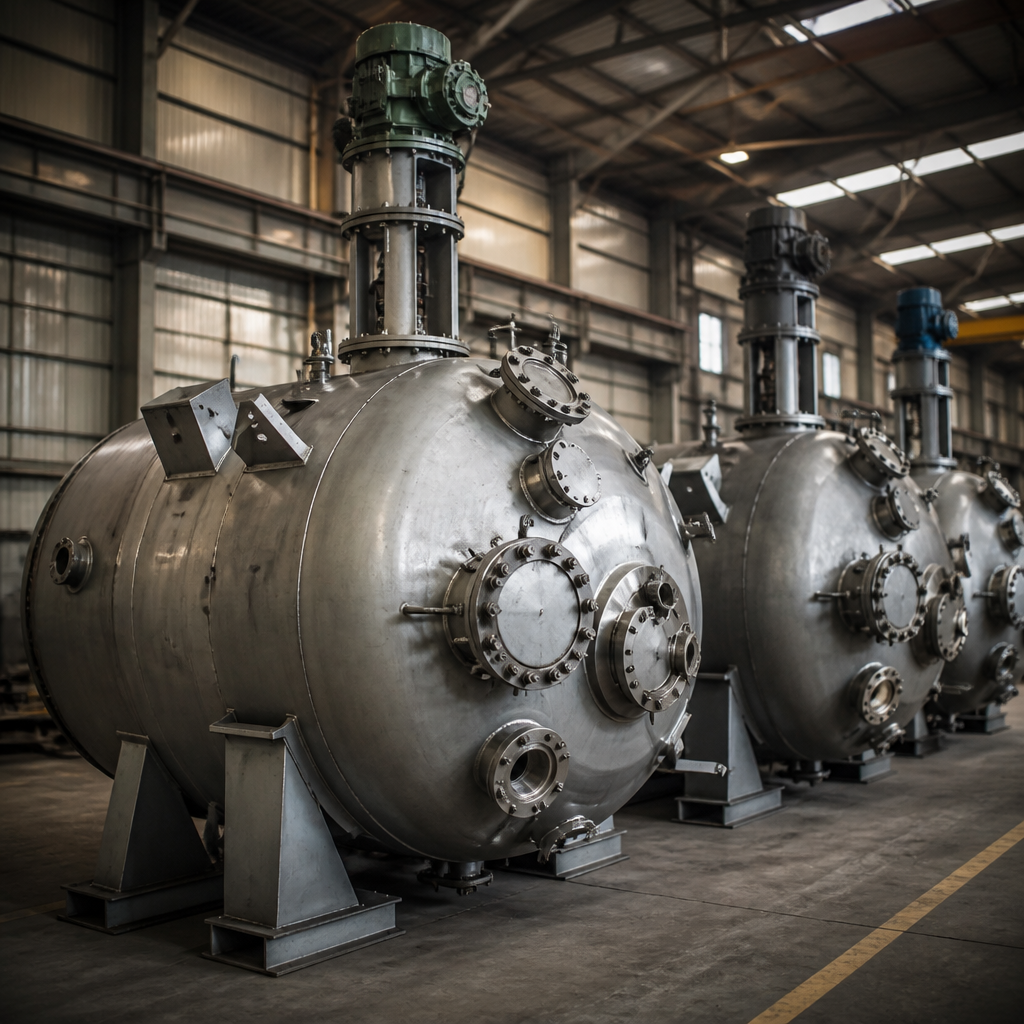
In the world of chemical processing, pharmaceutical manufacturing, and petrochemical production, capital equipment decisions carry enormous financial and operational weight. Among the most significant of these decisions is how a facility acquires its core processing vessels — particularly reactors. While new equipment has its place, a growing number of plant managers, procurement specialists, and process engineers are turning to the secondary market as a smarter, faster, and more cost-effective path to operational readiness. Understanding the full scope of this decision requires a closer look at reactor design fundamentals, maintenance considerations, and the sourcing landscape.
The Role of Reactors in Industrial Processing
Reactors are the heart of any chemical or process plant. Whether you are running exothermic reactions in a pharmaceutical batch process, managing continuous flow in a petrochemical refinery, or handling polymerization in a specialty chemicals facility, the reactor defines the efficiency, safety, and output quality of your entire operation. These vessels must withstand extreme pressures, corrosive media, elevated temperatures, and precise thermal control — all while maintaining structural integrity over years of continuous use.
The design complexity of reactors is well-documented in engineering literature. According to detailed guidance on reactor and pressure vessel design principles, the engineering considerations span material selection, wall thickness calculations, nozzle placement, agitation systems, and heat transfer efficiency. These are not simple vessels — they are precision-engineered systems built to exacting standards, which is precisely why their residual value on the secondary market remains high.
New vs. Used: Rethinking the Default Assumption
For decades, the default assumption in industrial procurement was that new equipment was always preferable. This thinking is understandable — new reactors come with manufacturer warranties, the latest design specifications, and no history of wear. However, this perspective overlooks several critical realities that experienced procurement professionals have come to appreciate.
Lead Times and Project Timelines
Custom-fabricated reactors can take anywhere from six months to over two years to manufacture and deliver, depending on complexity, material availability, and manufacturer capacity. For facilities facing urgent capacity expansions, plant restarts, or equipment failures, this timeline is simply not viable. The secondary market offers immediate or near-immediate availability of inspected, documented equipment that can be integrated into existing processes with far less delay.
Capital Efficiency and Budget Allocation
A new reactor of significant capacity can represent millions of dollars in capital expenditure. A comparable used unit — properly inspected and certified — may cost a fraction of that price, freeing up budget for process optimization, safety upgrades, instrumentation, or workforce development. In an era where capital efficiency is scrutinized at every level of an organization, the financial case for quality used equipment is increasingly difficult to ignore.
What to Look for When Evaluating Used Reactors
Not all used reactors are created equal, and the due diligence process matters enormously. Buyers should request full documentation of the vessel’s service history, including the media it processed, operating pressures and temperatures, any repairs or modifications, and the results of previous inspections. Ultrasonic thickness testing, hydrostatic pressure testing, and weld inspection records are all critical data points that inform a buyer’s risk assessment.
Material Compatibility
The metallurgy of a reactor must be compatible with the intended process media. Stainless steel, Hastelloy, glass-lined carbon steel, and titanium each serve different chemical environments. A reactor previously used in a food-grade application may not be suitable for aggressive acid service without significant modification. Buyers must verify that the vessel’s construction materials align with their specific process chemistry before committing to a purchase.
Agitation and Heat Transfer Systems
Many reactors include integrated agitation systems — impellers, baffles, and mechanical seals — as well as jacketing or internal coils for temperature control. The condition of these components is just as important as the vessel shell itself. Worn mechanical seals, damaged impeller blades, or corroded jacket surfaces can significantly affect performance and may require costly refurbishment before the unit is operational.
The Importance of Sourcing from Reputable Suppliers
When it comes to acquiring process equipment through the secondary market, the reputation and expertise of the supplier is paramount. Buyers should look for suppliers who maintain detailed inventory records, offer transparent inspection reports, and have a demonstrated track record in the process industries. International Process Plants is one such resource — a trusted name in the surplus and used process equipment market. For facilities actively seeking used reactors for sale, their inventory spans a wide range of reactor types, sizes, and materials, supported by thorough documentation and industry expertise that gives buyers confidence in their investment.
Maintenance Considerations After Acquisition
Acquiring a used reactor is only the beginning. Once the unit is installed and commissioned, a rigorous maintenance program becomes essential to protecting the investment and ensuring long-term operational reliability. This principle extends beyond reactors to all major process equipment — heat exchangers, compressors, pumps, and thermal management systems all require consistent attention.
The value of proactive maintenance is well-established across industrial and commercial settings alike. Much like routine heat pump maintenance prevents costly system failures in building environments, scheduled inspection and servicing of process reactors prevents unplanned downtime, extends equipment life, and maintains process safety. Establishing a preventive maintenance schedule from day one of operation is not optional — it is a fundamental operational discipline.
Inspection Intervals and Regulatory Compliance
Most jurisdictions require pressure vessels, including reactors, to undergo periodic inspection by certified inspectors. These inspections verify that the vessel continues to meet its original design specifications and that no degradation — corrosion, fatigue cracking, or mechanical damage — has compromised its integrity. Buyers of used equipment should factor these regulatory requirements into their acquisition planning and ensure that the vessel’s documentation supports compliance from the outset.
About International Process Plants
International Process Plants has built a strong reputation as a global leader in the buying and selling of complete process plants and individual pieces of surplus process equipment. With decades of experience serving the chemical, pharmaceutical, petrochemical, food processing, and energy sectors, the company offers buyers access to a vast and well-documented inventory of reactors, distillation columns, heat exchangers, and more. Their team of process engineers and equipment specialists provides the technical support needed to match the right equipment to each buyer’s specific process requirements, making the acquisition process straightforward and reliable.
Conclusion: A Calculated Path to Operational Readiness
The decision to source used reactors rather than new ones is not a compromise — it is a calculated strategic choice that can deliver significant advantages in cost, speed, and flexibility. When approached with proper due diligence, supported by a reputable supplier, and followed by a disciplined maintenance program, used reactor acquisition represents one of the most effective tools available to process industry professionals managing capital-intensive operations. As the secondary market for process equipment continues to mature, the quality and availability of used reactors will only improve, making this sourcing strategy increasingly attractive for facilities of all sizes and industries.