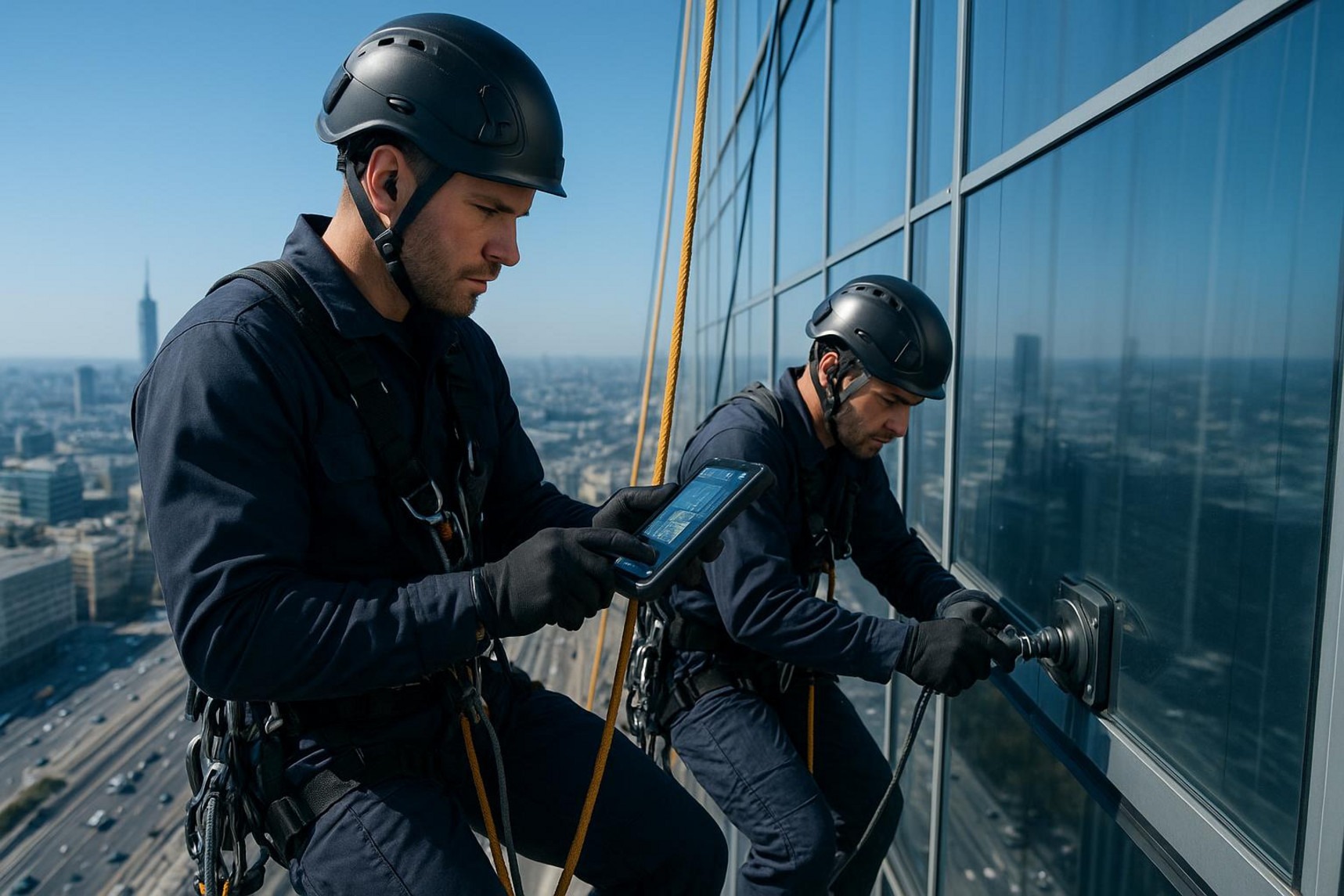
Rope access specialists are trained workers who use ropes, harnesses, and special safety gear to reach and carry out work in high places, hard-to-reach spots, or tight areas where normal methods can be difficult or impossible. Their skills often lead to faster work and lower costs across many industries. They also bring clear benefits compared with common access options like scaffolding, mobile elevated work platforms (MEWPs), or cradles.
To understand what they can do-and why more projects now choose them-it helps to look at what these specialists are and how their access methods compare. If you’re looking for dedicated rope access specialists, it helps to understand how their approach works.
What Are Rope Access Specialists?
What Is Rope Access?
Rope access is a work-at-height method where trained technicians use ropes and harnesses to reach raised or difficult locations. Instead of building large temporary structures or using heavy machines, rope access uses light equipment that can be set up quickly. Work often involves abseiling, where technicians go down or up from the top of a structure.
For safety, they use a strong two-line system: one main working rope and a separate backup rope. This two-rope setup, along with strict training, is a key reason rope access has a strong safety record and lets technicians work accurately and quickly in tricky locations.
Common Roles and Responsibilities
The work rope access specialists do covers a wide range of tasks, which shows how flexible this method is. They are often hired to inspect and maintain many types of structures, such as bridges, tall buildings, wind turbines, and large industrial sites. Their work can include visual checks, non-destructive testing (NDT) to check the condition of materials, and construction tasks like rigging, drilling, and concrete repairs in places other methods can’t reach.
They may also carry out safety checks and are trained for high-angle rescue, which helps protect their team and others on site. Rope access jobs are carefully planned and managed by a Rope Access Supervisor, usually a Level 3 Technician, who makes sure safety rules are followed and the work is done properly.
Industries and Applications
Rope access is used in many industries because it works well in different settings. In aerospace, construction, and oil and gas, it’s useful for facade checks, detailed maintenance on large structures, and work on tall buildings where other methods don’t fit.
The energy sector uses rope access to inspect and maintain wind turbines, hydro dams, and pipelines. In mining, these specialists may do drilling, rock scaling, and blasting on steep or vertical ground.
In geology and surveying, rope access can help teams reach sites for exploration and guidance work. It’s also widely used for regular building upkeep like exterior and window cleaning, bird proofing, roof repairs, and leak checks, with less disruption for property managers and facilities teams.
Types of Access Methods Used by Rope Access Specialists
Rope Access vs. Scaffolding
For work at height, many people think of scaffolding first, especially on large construction jobs. Scaffolding is a temporary frame, usually metal, that supports workers and materials. It creates a stable platform and works well for jobs where workers need to stay in one place for a long time, such as painting, brickwork, or major repairs.
However, scaffolding can take a lot of time to build and remove-often days or weeks-and needs careful planning to stay safe and stable. It can also block entrances and walkways, and it is visually obvious, which can cause complaints from nearby businesses and residents.
Rope access takes a different approach. Technicians use ropes and harnesses to reach high or awkward areas with little equipment. It works well where scaffolding would be a poor fit, such as around complex building features like ledges, spires, domes, or in places with little ground space (including busy city areas and offshore sites).
Because rope access has a smaller visual footprint and causes less disruption around the building, it is often chosen for jobs with short deadlines or sensitive locations.
Rope Access vs. Mobile Elevated Work Platforms (MEWPs)
Mobile Elevated Work Platforms (MEWPs)-often called cherry pickers or boom lifts-use a powered platform to raise workers to different heights. They can be moved and can reach up and across better than ladders, and they are usually faster to set up than scaffolding.
Still, MEWPs need firm, level ground, and their size can limit where they can go in tight or crowded spaces. They also come with running costs like fuel, upkeep, and trained operators. On many sites, they can get in the way of work happening at ground level.
Rope access avoids many of these issues. Technicians work from ropes, so they can reach areas a MEWP cannot get to, such as complex building shapes, very high points beyond a lift’s reach, or places with overhead obstacles. Rope access uses far less space on the ground and does not rely on heavy machines, which can make it a good fit for busy offices, shops, and homes where day-to-day activity needs to continue.
Rope Access vs. Cradles and Ladders
Cradles (suspended platforms) are often built into some buildings and can move up and down along the facade. Ladders are a simple option for lower heights. Both can be useful, but they have limits.
Cradles can be costly to install and keep in good condition, they only work where the system is fitted, and they can be slow to cover a wide area. Ladders are easy to move but have height limits, need frequent repositioning, and give a less stable working position, often needing extra fall protection.
Rope access is more flexible than both. Technicians can usually reach almost any point on a structure, even if there is no cradle system installed. This is especially helpful on buildings with awkward shapes where cradles can’t pass, or where the job needs movement around different features.
For higher or more complex work than a ladder can support safely, rope access offers a stable and efficient option without the cost of installing permanent systems or relying on a less steady platform.
Comparing the Benefits and Risks of Different Access Methods
Speed and Flexibility
Project speed is one of the biggest reasons rope access is chosen. Scaffolding takes time to build and take down, which can add weeks to a schedule and increase labour costs-especially on short jobs. Because work can’t start until the scaffold is ready, buildings and sites may face long periods of waiting.
Rope access can be set up much faster, often letting technicians start within hours of arriving. It also packs away quickly, which suits urgent repairs, short deadlines, and emergency callouts. Rope access technicians can also move between heights using ascenders and descenders, which helps them cover different work areas quickly. This is useful in cities or offshore locations where ground space is limited and fast response matters.
Cost Implications
Rope access often costs less than scaffolding. Scaffolding can raise costs because it needs lots of materials, longer setup time, and larger teams to build, check, and remove it. Rental charges can also apply, even when the task itself is short, which can strain smaller budgets.
Rope access usually needs less equipment and fewer people to set up and remove it, which lowers labour and material costs. Faster setup and completion can also cut downtime, helping sites stay open and reducing lost income. Rope access also avoids many of the transport, build, and removal costs linked with large scaffold structures.
Many projects using rope access can save around 30% to 70% compared with scaffolding. Another cost benefit is that many rope access technicians have extra trade skills, which can reduce the need to bring in separate contractors.
Safety Considerations
Safety is a main concern for any work at height, and rope access has a very strong safety record. In many cases, accident rates are lower than with scaffolding. A big reason is the strict training and certification set by bodies such as the Industrial Rope Access Trade Association (IRATA) and the Society of Professional Rope Access Technicians (SPRAT).
Rope access technicians are trained in safe working routines, correct use of equipment, and rescue procedures. The standard two-rope system means the worker is attached to both a working rope and a separate backup rope. Tools are often tied off to reduce the risk of objects falling onto people below. Scaffolding is also regulated, but large fixed structures can create risks, including falling objects and movement or instability during strong winds or bad weather.
Environmental Impact
Rope access can be better for the environment than scaffolding. Because it uses less heavy machinery and fewer materials, it often reduces noise on site, which can help nearby residents and workers. It also creates less waste than scaffold builds. Making scaffold materials such as steel, aluminium, and timber uses energy and raw resources, which adds to the environmental impact. Even if these materials can be recycled, the impact from making and moving them is still considerable.
Rope access reduces the need for new materials and lowers energy use during setup and work. This makes it a good option for organisations that want to cut their environmental impact while still getting the job done efficiently.
When Should You Choose Rope Access Over Traditional Methods?
Project Types and Scenarios Best Suited to Rope Access
Rope access works very well when other methods are too expensive, hard to use, or cause too much disruption. It suits projects that need quick setup, lower costs, less disturbance, and a smaller environmental footprint. Common examples include industrial inspections, detailed facade maintenance, and high-rise work on complex buildings or in tight spaces.
Rope access is often a good choice on busy streets with heavy foot traffic, where scaffolding would block paths and cause delays. It also works well for residential buildings, where residents are affected by noise and access restrictions, and for commercial properties that need to stay open during the work. Buildings with complex facades, awkward ledges, and many different work zones also suit rope access because technicians can move along the exterior quickly and adjust to changing conditions, including poor weather.
Limitations and When to Consider Alternatives
Rope access is not the right answer for every job. A good contractor will review the site and the task before picking the method. In some cases, scaffolding or MEWPs may be the better choice. For example, scaffolding can be best where workers need a wide, stable platform for a long time, or where heavy tools and long hours in one position are required, such as major construction or long-term facade restoration.
Rope access can also be limited by anchor points. Roof anchors might not be suitable, parapet walls can get in the way, the building shape may block access, or there may be no safe anchor points at all. In these cases, technicians may only reach parts of the facade and not the exact work spot. Solving this can require careful access planning, strong safety knowledge, and sometimes custom solutions like temporary anchors or a mixed method using more than one access system. An experienced contractor will spot these issues during early checks and suggest the most practical plan.
Expertise and Qualifications: What Sets Rope Access Specialists Apart?
Training and Certification Levels
Rope access specialists stand out because of strict training and widely recognised certification. Bodies such as IRATA and SPRAT set strong safety rules and follow a clear training and assessment system for work at height. Certification usually follows three levels:
- Level 1: Entry level. Focuses on safe movement, positioning, and basic rescue. Level 1 technicians work under close supervision from a Level 3.
- Level 2: More advanced rope techniques, with some supervision duties and support in planning and doing tasks.
- Level 3: Expert level. Can plan and manage full rope access operations, including complex rigging and advanced rescue. They supervise the team and make sure safety rules are followed.
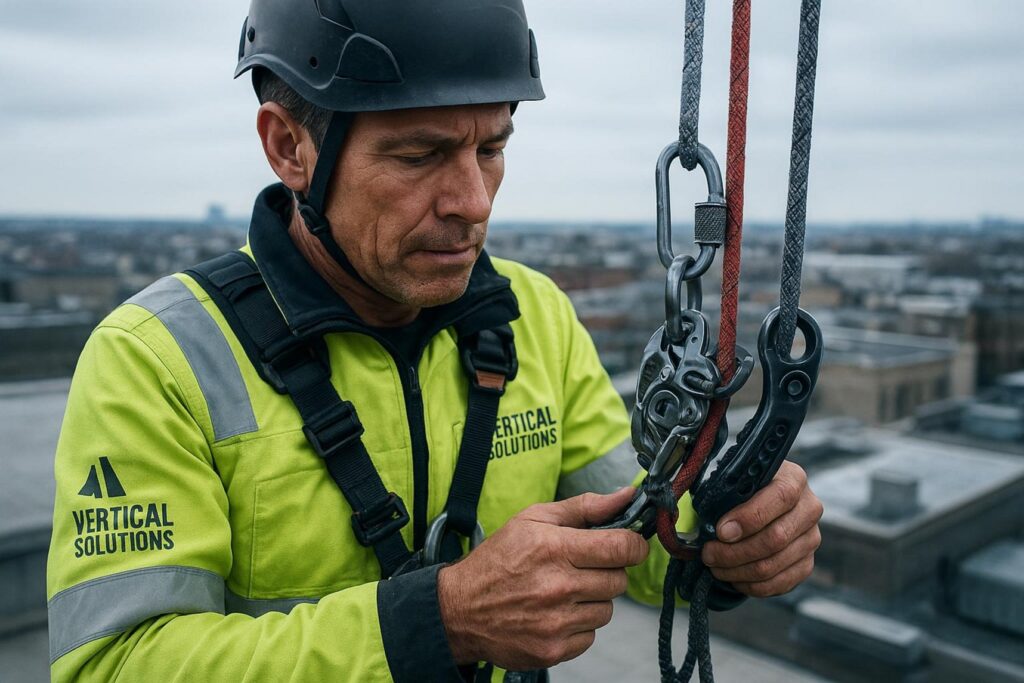
Training covers rope techniques and equipment use, along with safety routines and emergency steps, so technicians can work safely and efficiently in difficult conditions.
Assessing Experience and Project Fit
Certification is important, but it does not automatically mean a contractor is the right choice for every job. Real experience, ongoing training, and good supervision also matter. When choosing a rope access company, look at their experience with jobs like yours-similar heights, building types, occupancy, and access limits. Case studies, photos, and references can help you see how they work and how they handle real site problems.
Many rope access technicians also have other trade skills, such as welding, pipefitting, NDT, or electrical work. This can reduce the need for multiple teams, since the same crew can reach the work area and complete the task. Still, rope access certification covers the access method, not always the trade work being done. For technical tasks, extra trade qualifications are often needed.
Depending on the site, technicians may also need extra safety training, such as confined space entry, fire awareness, or equipment inspection skills. Offshore work often needs added training for marine travel, medical fitness, survival, and emergency response. This is why experience and qualifications should be checked based on the exact job.
Commitment to Safety Standards
A contractor’s approach to health and safety should be a main factor in your choice. Strong safety processes protect workers, lower project risk, reduce delays, and help the job run smoothly. Most companies have safety policies, but the quality of planning and day-to-day practice can vary a lot.
Ask how safety is handled on site. This includes site-specific risk assessments and method statements (RAMS), rescue plans, and emergency steps. Ask who will supervise, how often equipment is checked and maintained, what insurance is in place, and how bad weather is managed. A company that can explain these points clearly, and show how they deal with unexpected changes on site, is more likely to take safety and planning seriously — accredited contractors such as Rope Access in London publish their IRATA membership and ISO 45001 certification, which gives you a starting point for these questions.
What to Look For in a Rope Access Specialist or Company
Professional Accreditation and Regulatory Compliance
Not all rope access providers offer the same level of skill, safety, or service. Accreditation is a key sign of competence. Look for companies whose technicians are qualified through IRATA and/or SPRAT, as these follow strict training and global safety rules.
Also ask about extra certifications or memberships, as these can show a wider focus on quality and safety. For example, meeting OSHA 1910 standards can indicate a company takes safe access work seriously. A strong contractor won’t just provide access-they will also help reduce risk, limit disruption, and complete work to the standard you need.
Demonstrated Track Record and References
Experience matters, especially for difficult work at height. Check whether the contractor has done similar projects-same type of building, similar height, similar use (occupied homes, active offices, industrial sites), and similar tasks. Ask for case studies, photos, and client references. These give real proof of skill and problem solving.
For example, a contractor used to working on occupied residential blocks is more likely to manage communication and keep disruption low than a team that only works on industrial sites. With enough experience, contractors often spot access issues early and suggest practical fixes that may not be obvious on the first visit.
Clear Reporting and Transparent Pricing
Clear communication and easy-to-follow pricing help projects run well, especially when multiple people are involved. A good rope access company should provide clear records of the work done, with photos, notes, and recommendations where needed. This is especially useful for inspections, investigations, and compliance checks, where the results are a key part of the job. Good reporting makes future maintenance planning much easier.
Transparent pricing is just as important. The lowest quote is not always the best value. You should know exactly what is included. A clear quote should explain the scope of work, the access method, any assumptions, and what is not included. Also ask how changes will be priced if extra problems are found once work starts, which is common in maintenance work where issues can be hidden until access is set up. A clear quote makes it easier to compare providers and reduces the chance of unexpected costs later.
Frequently Asked Questions on Rope Access Specialists and Access Methods
Is Rope Access Safer Than Scaffolding?
Yes. Data often shows rope access has fewer recordable injuries than scaffolding. This is largely because of strict training and certification from bodies like IRATA and SPRAT, covering safe routines, equipment use, and emergency actions. Rope access also uses built-in backup, with a two-rope system where technicians are attached to both a working line and a separate safety line. Tools are also tied off to reduce falling-object risks. Scaffolding is regulated too, but its large structures can bring added risks such as falling objects or movement in poor weather, which can raise accident rates.
Can Rope Access Be Used for Maintenance and Inspections?
Yes. Rope access is widely used for maintenance and inspections. It works well for facade checks, leak investigations, and exterior cleaning, including windows. It is also used for brick and masonry repairs, bird proofing, and roof repairs. In industrial sites, rope access teams can carry out non-destructive testing (NDT), detailed inspections, and mechanical work such as welding, pipefitting, and valve maintenance. Because it can reach complex building shapes and difficult industrial parts, it is a practical option for planned maintenance and compliance work.
How Does Rope Access Reduce Project Downtime?
Rope access reduces downtime mainly because it is fast to set up and pack away. Scaffolding can take days or weeks to build and remove, but rope access can often be ready within hours, so work can start quickly. Many sites can stay open with less disruption, avoiding long shutdowns. Technicians can also move quickly between work points, which helps finish tasks faster. By reducing time spent getting to the work area and allowing quick response to urgent problems, rope access helps projects finish sooner, cutting lost revenue and helping businesses return to normal operation faster.
Also Read | Essential Guide to Choosing Durable Roofing Solutions for Long-Term Business Protection