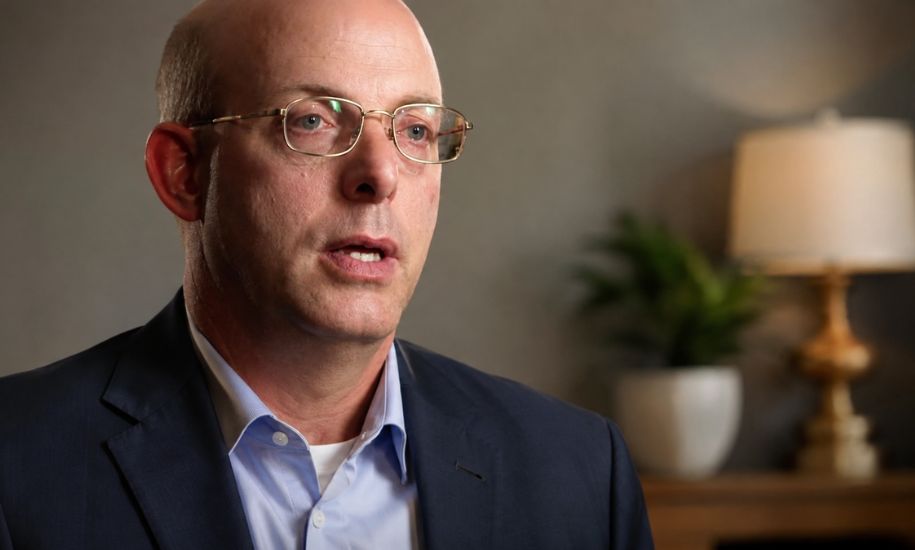
Duane Deaver became a widely discussed figure in American true crime because of his work as a bloodstain-pattern analyst for the North Carolina State Bureau of Investigation (SBI). His testimony played an important role in the prosecution of Michael Peterson, whose wife Kathleen Peterson was found dead at the bottom of a staircase in 2001. Years later, questions about Deaver’s forensic work, professional experience, and handling of evidence contributed to renewed scrutiny of the case and the wider practices of the SBI. His story has since been featured in documentaries and television coverage, most notably The Staircase.
Who Is Duane Deaver?
So, who is Duane Deaver? He is a former North Carolina SBI agent and forensic analyst whose career eventually became intertwined with one of the most controversial criminal cases in the United States.
Deaver joined the SBI in 1985 and worked in several areas during his career, including serology, training, environmental crimes, clandestine-laboratory investigations, and human resources. He later became known publicly for his work involving bloodstain-pattern analysis. His professional background gave him a prominent role as an expert witness in criminal investigations and courtroom proceedings.
His public reputation changed considerably after questions emerged about forensic evidence in several criminal cases. The controversy eventually contributed to his dismissal from the SBI in 2011.
Duane Deaver as a Blood Spatter Analyst
The phrase “Duane Deaver blood spatter analyst” is closely associated with the Michael Peterson investigation. Bloodstain-pattern analysis attempts to interpret the shape, distribution, and location of bloodstains to help investigators reconstruct events at a crime scene.
In Peterson’s case, Deaver examined blood evidence at the staircase where Kathleen Peterson was found. At the 2003 murder trial, he testified that the patterns were consistent with Kathleen having been struck rather than simply suffering an accidental fall. His interpretation became a significant part of the prosecution’s presentation.
The importance of his evidence later became a major issue when Peterson’s lawyers challenged the original conviction. A defense filing described Deaver’s testimony as central to the prosecution’s argument that bloodstain patterns demonstrated an assault.
Duane Deaver and the Michael Peterson Case
Kathleen Peterson died in December 2001 after being discovered at the bottom of a staircase in the Peterson family’s Durham, North Carolina, home. Her husband, novelist Michael Peterson, said that she had fallen down the stairs. Prosecutors argued that she had been beaten.
Deaver testified for the prosecution during Peterson’s 2003 trial. His bloodstain analysis was used to support the prosecution’s theory of the death, while defense experts disputed the interpretation of the evidence.
Peterson was convicted of first-degree murder and sentenced to life imprisonment. For years, the conviction remained in place. However, the later investigation into SBI laboratory practices created a new opportunity for Peterson’s defense to challenge Deaver’s testimony.
The controversy became even more prominent through The Staircase, which introduced the case to a much larger international audience. Deaver appears in archival material connected with the case and became one of the forensic figures most closely associated with the disputed evidence.
Why Did Duane Deaver Lose His SBI Job?
One of the most important questions surrounding his career is what happened to Duane Deaver after the Peterson trial.
In 2010, an outside review of the North Carolina SBI crime laboratory examined blood evidence from numerous criminal cases. The review raised serious concerns about the reporting and handling of forensic evidence. Contemporary reporting said that approximately 190 to 200 cases were potentially affected by problems involving blood evidence.
Deaver was among the analysts whose work received particular scrutiny. One important issue involved the case of Greg Taylor, a North Carolina man who spent years in prison after being wrongly convicted of murder. Deaver had failed to report a blood-test result that could have been helpful to Taylor’s defense.
The investigation also examined Deaver’s testimony and representations about his forensic experience. His professional conduct became the subject of substantial criticism, and the SBI ultimately fired him in January 2011.
What Did Duane Deaver Do Wrong?
The answer requires some context because several different issues became part of the controversy.
Criticism of Deaver involved the reporting and interpretation of blood evidence, his testimony concerning his professional qualifications and experience, and the handling of potentially useful test results. During later proceedings in the Peterson case, questions were raised about whether he had accurately described his training and experience to the original jury.
A forensic expert who testified during the Peterson proceedings also criticized some of Deaver’s testing methods. WRAL reported that the expert argued Deaver had concentrated on selected blood droplets while failing to adequately account for other evidence that did not fit his conclusions.
The controversy was therefore broader than a disagreement between two forensic experts. It concerned whether the evidence had been analyzed and presented in a sufficiently reliable and transparent manner.
The Greg Taylor Connection
The Greg Taylor case became another major turning point in the story.
Taylor was convicted of murder and spent many years in prison before his conviction was overturned. Questions about the forensic evidence used against him helped expose broader problems within the SBI laboratory.
Deaver’s handling of blood testing in the Taylor case was particularly significant because a negative test result was not reported to the defense. That omission became part of the scrutiny that eventually surrounded his professional conduct.
The case demonstrated why forensic analysts have a responsibility to report results accurately, including findings that may weaken the prosecution’s theory. It also contributed to a larger debate in North Carolina about oversight, laboratory procedures, and the reliability of expert testimony.
Duane Deaver’s Legal Battle After His Dismissal
Deaver did not simply accept his termination. He challenged the decision and maintained that he had been treated unfairly.
In 2014, he appeared in administrative proceedings to contest his dismissal. His attorneys argued that he had become a scapegoat amid intense criticism of the SBI. Reporting from the Charlotte Observer described the proceedings as Deaver’s opportunity to tell his side of the story publicly.
The legal and administrative history was complicated, and different proceedings addressed different aspects of his employment dispute. This is why descriptions of his firing should avoid oversimplifying the outcome.
Ultimately, however, his career with the SBI did not resume, and his professional identity remained strongly associated with the forensic controversy.
What Is Duane Deaver Doing Now?
What is Duane Deaver doing now? This is one of the most difficult questions to answer because reliable recent information about his private life and current occupation is limited.
Public reporting from the years immediately following his dismissal focused largely on his employment dispute, testimony, and the Peterson proceedings rather than a later career. Available sources do not provide a dependable current professional profile for 2025 or 2026.
For that reason, claims about a specific current employer or occupation should be treated cautiously unless supported by a recent, authoritative source. His documented public legacy remains connected primarily to his former SBI career and the Michael Peterson case.
Is Duane Deaver Still Alive?
There is no reliable evidence in the sources reviewed indicating that Duane Deaver has died. However, there is also limited recent public reporting about his personal life.
Consequently, it is more responsible to say that no credible death report was identified rather than making an unsupported statement about his current personal circumstances.
Information about his family has also remained relatively private. Earlier legal records and deposition material indicate that he was married and had children, but detailed current information about his spouse and family is not well documented in authoritative recent sources.
Duane Deaver’s Lasting Legacy
Duane Deaver’s significance extends beyond one criminal investigation. His story illustrates the enormous influence forensic testimony can have in a courtroom and the consequences that can follow when questions arise about the reliability of that evidence.
The Peterson case eventually became a landmark example in discussions about expert testimony, bloodstain-pattern analysis, prosecutorial evidence, and forensic oversight. His role was also revisited through documentaries and true-crime programming, helping make the controversy familiar to audiences far beyond North Carolina.
For readers asking “who is Duane Deaver,” the simplest answer is that he is a former North Carolina SBI agent and bloodstain analyst whose testimony in the Michael Peterson case became controversial after broader problems in the SBI laboratory were uncovered.
His career remains a reminder that forensic evidence can be powerful, but it must also be carefully tested, accurately reported, and transparently presented.
For readers interested in investigative stories, courtroom controversies, and the people behind major criminal cases, Insider Newz provides a useful place to explore the background behind the headlines and understand the facts that shaped these stories.