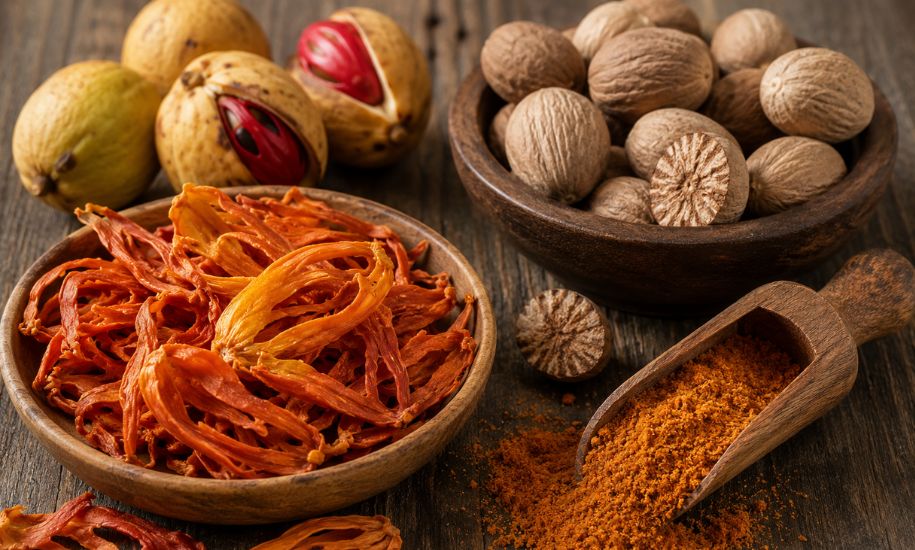
Mace spice is one of those ingredients that can quietly transform a dish without overpowering everything around it. Warm, fragrant, slightly sweet, and delicately peppery, it has been used for centuries in South Asian cooking, European baking, sauces, meat dishes, and traditional spice blends. Although it is closely connected to nutmeg, mace has its own distinctive aroma and culinary personality. From biryani and garam masala to cakes and creamy sauces, this versatile seasoning deserves a place in any well-stocked spice cabinet.
What Is Mace Spice?
Mace is obtained from the fruit of the nutmeg tree, scientifically known as Myristica fragrans. Inside the ripe fruit is a hard seed that becomes nutmeg, while wrapped around that seed is a thin, web-like covering called the aril. This colorful outer layer is carefully removed and dried to produce mace.
When fresh, the aril is usually bright red or reddish-orange. As it dries, it gradually develops shades of orange, yellow, or golden brown. It may be sold as whole pieces, commonly known as mace blades, or ground into a fine powder.
Because the spice comes from only a relatively small covering around each nutmeg seed, its production is more limited than that of nutmeg itself. This is one reason good-quality mace can be relatively expensive.
What Does Mace Spice Taste Like?
The flavor is often compared with nutmeg because both come from the same fruit. However, they are not identical.
Mace has a warm, sweet, woody, and aromatic character with gentle floral and peppery notes. Some people also notice a subtle citrus-like freshness. Nutmeg, by comparison, usually tastes sweeter, richer, and more distinctly nutty.
The refined aroma makes mace especially useful when a cook wants warmth and complexity without creating an overly heavy flavor.
It is also quite aromatic, so a small quantity can have a noticeable effect. Adding too much may dominate a dish, particularly when using the powdered form.
Mace Spice vs Nutmeg: What’s the Difference?
Mace and nutmeg are sometimes confused, but they are two separate spices produced from different parts of the same fruit.
Nutmeg is the seed found inside the fruit. Mace is the dried covering that surrounds that seed.
Their flavor profiles overlap, but mace tends to be more floral, fragrant, and slightly peppery, while nutmeg offers a sweeter and deeper nutty character.
Their appearance is also very different. Whole nutmeg looks like a firm brown seed, while whole mace consists of thin, irregular, dried blades.
Both spices work in sweet and savory recipes, and in some dishes they can substitute for one another. However, replacing one with the other may slightly change the final aroma.
What Is Mace Spice Used For?
Mace is surprisingly versatile. It can be used in meat dishes, rice recipes, sauces, desserts, soups, baked goods, and spice blends.
Common culinary uses include:
- Biryani
- Garam masala
- Korma
- Meat curries
- Rice dishes
- Soups and stews
- Cream sauces
- Pickling mixtures
- Cakes and biscuits
- Custards
- Spiced drinks
Whole mace is particularly useful in recipes that cook slowly. A small blade can be added to rice, curry, broth, or sauce and removed before serving.
Ground mace works particularly well when the spice needs to blend evenly into a recipe, such as cakes, biscuits, spice mixes, sauces, or meat seasonings.
Mace Spice in Indian and Pakistani Cooking
In South Asian cuisine, mace is widely known as javitri. It plays an important supporting role in many aromatic dishes, especially those prepared for celebrations, weddings, and special occasions.
Javitri may be combined with cardamom, cinnamon, cloves, black pepper, cumin, coriander, bay leaves, and nutmeg. Together, these spices create layers of warmth and fragrance rather than simply making food hot.
It is often found in traditional garam masala preparations, although recipes vary between households and regions.
Mace also works particularly well with lamb, beef, chicken, basmati rice, creamy gravies, and slow-cooked dishes.
Mace Spice for Biryani
Biryani is one of the best examples of how a small amount of mace can influence an entire dish.
A piece of javitri may be added alongside green cardamom, black cardamom, cinnamon, cloves, bay leaves, star anise, and other whole spices. As the rice and meat cook, the mace releases a warm fragrance that contributes to biryani’s characteristic complex aroma.
When using whole blades, only a small piece is generally necessary. Too much can make the spice profile overly intense.
Ground mace can also be included in homemade biryani masala, especially when preparing a spice mixture that will be stored for later use.
Whole Mace vs Ground Mace
Whole mace and ground mace can serve slightly different purposes in the kitchen.
Whole blades retain their aroma well and are ideal for slow cooking. They can be added to curries, soups, rice dishes, stocks, and stews and removed before the meal is served.
Ground mace is more convenient for baking, seasoning mixtures, desserts, and recipes where an even distribution of flavor is important.
Whole spices generally retain their fragrance longer than powdered versions. For this reason, cooks who use mace only occasionally may prefer buying whole pieces and grinding a small amount when needed.
How to Use Mace Spice
The key to cooking successfully with mace is moderation.
For rice or curry, add a small whole blade while the dish cooks. It can be removed before serving if desired.
When using mace powder, begin with a small pinch. Taste the dish before adding more because its flavor becomes more noticeable as it cooks.
Whole mace can also be lightly toasted with other spices before grinding. Gentle heating helps release its aromatic oils, but excessive roasting may create bitterness.
In desserts, a small amount can complement ingredients such as milk, cream, vanilla, cinnamon, fruit, and nuts.
Its warm character also works well in savory dishes containing onions, garlic, meat, and rich sauces.
Best Substitute for Mace Spice
Nutmeg is generally the closest substitute because it comes from the same fruit and shares many of the same aromatic qualities.
If mace is unavailable, a small amount of nutmeg can usually work in both sweet and savory recipes.
Other alternatives may include allspice or cinnamon, depending on the dish. Allspice can provide warm and slightly peppery notes, while cinnamon works particularly well in desserts.
Garam masala may sometimes replace mace in Indian savory dishes, but it should be used carefully because it contains several spices and will change the overall flavor profile.
When making substitutions, start with less than the recipe calls for and adjust gradually.
Potential Mace Spice Benefits
Like many plant-based spices, mace contains naturally occurring aromatic compounds and antioxidants. It also provides small quantities of minerals such as calcium, magnesium, potassium, and iron.
Traditionally, mace and related nutmeg preparations have been used in different cultures for digestive comfort and other purposes. Modern research has also investigated compounds found in the nutmeg plant for antioxidant, antimicrobial, and anti-inflammatory properties.
However, these findings should not be interpreted as proof that eating mace can prevent or treat medical conditions.
In normal cooking, it is best regarded primarily as a flavorful spice rather than as a medicine or supplement.
Is Mace Safe to Eat?
Mace is commonly used in ordinary culinary quantities, but large or concentrated amounts should be avoided.
The nutmeg plant naturally contains compounds such as myristicin. Excessive consumption of nutmeg-family spices has been associated with unpleasant effects including nausea, dizziness, agitation, dry mouth, abnormal heartbeat, and hallucinations.
For everyday cooking, only small amounts are normally required to create the desired flavor.
Anyone considering concentrated or medicinal use, particularly during pregnancy or while managing a health condition, should seek appropriate professional medical advice.
How to Store Mace Spice
Proper storage helps protect its delicate aroma.
Keep whole or ground mace inside a tightly sealed container in a cool, dry, and dark cupboard. Avoid storing it near a cooker, window, or other source of heat and moisture.
Whole mace generally remains aromatic longer than ground powder. If purchasing powdered mace, buying smaller quantities can help ensure that it is used while its fragrance is still fresh.
A weak or dusty smell usually indicates that the spice has lost much of its original intensity.
Final Thoughts
Mace is more than simply a relative of nutmeg. Its floral warmth, subtle sweetness, and fragrant complexity give it a distinctive role in cuisines around the world. Whether used as javitri in biryani and garam masala, infused into a rich sauce, or added carefully to a dessert, it can bring remarkable depth with only a small quantity. Understanding how to balance and store it allows home cooks to make much better use of this traditional ingredient. For more practical food guides, ingredient explainers, and useful culinary information, readers can continue exploring Insider Newz.