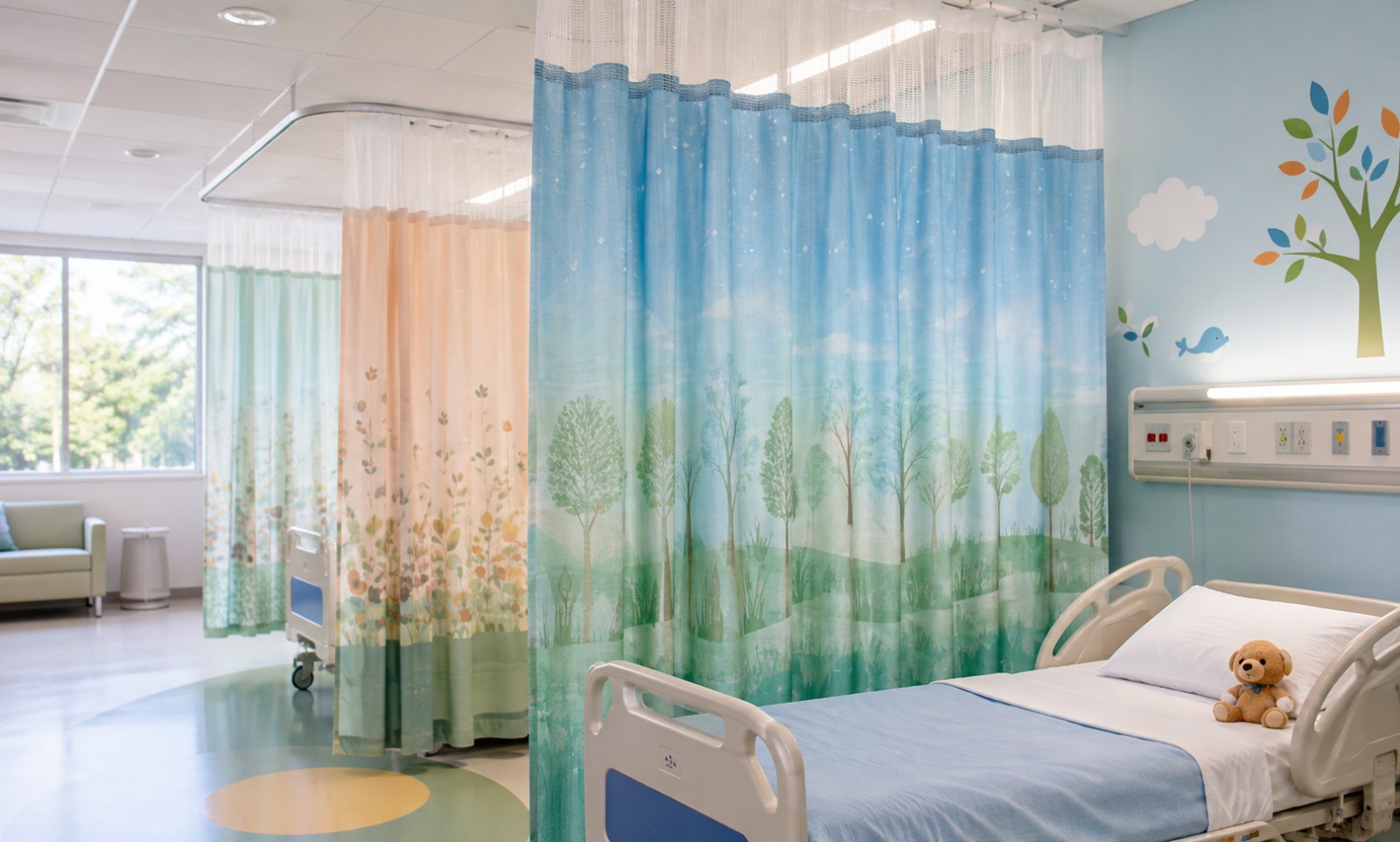
When designing any pediatric healthcare facility, the choice of colors is often an element that is overlooked as mere decoration or aesthetic appeal. Hospital management usually considers it a superficial decision, even though it is a very important and profound decision in making the clinical environment child-friendly.
Healthcare administrators and designers are well aware that the visual environment surrounding the patient directly affects their treatment experience and peace of mind, especially when it comes to caring for children.
In this context, the color and design of hospital shower curtain systems are seen not only for privacy, but as a scientific alternative to reduce children’s fears. The aim of this informative review is to understand the basic principles of color psychology and provide practical guidance for facility planning and procurement.
Why Pediatric Environments Require Different Design Principles
Pediatric wards require completely different design principles than adult wards. The main reason for this is that children perceive their unfamiliar and clinical surroundings differently; they are much more sensitive to visual stimuli than adults. Traditional and bland hospital designs that work well in adult wards can increase their fear and mental stress in pediatric wards. This is why pediatric design is considered a completely separate category within healthcare facility planning, where equal importance is given to the emotional and psychological well-being of children along with clinical needs.
Understanding Color Psychology in Healthcare Settings
Color Psychology in the medical environment refers to the scientific study of how the perception of different colors affects a person’s mood, behavior, and physical responses. This principle has long been used in hospital waiting rooms and patient rooms, but it is now being applied to bed curtains. The concept of Color Psychology Healthcare in Healthcare Design is not based on a fantasy hypothesis, but on the fact that choosing the right colors has the potential to reduce patient stress. However, it is important to take a realistic and balanced approach when using this knowledge, rather than assuming colors as the ultimate cure for diseases.
How Color Perception Differs Across Age Groups
It should be kept in mind that as children grow and develop, their reactions and preferences towards colors change. This is why the same color formula does not have the same effect on children of all ages.
How Color Choices Influence Child Anxiety and Emotional Wellbeing
The choice of colors in children’s hospitals is closely related to their emotional health and anxiety, the main aspects of which are as follows:
- The effect of calming colors: Soft blues, light greens, and muted pastels help keep mental stress and heart rate indicators normal in children
- Disadvantages of intense colors: Colors that are too bright, sharp, or high-contrast heighten alertness instead of calming children, which can make them irritable
- Alleviation of fear: Soft and familiar colors in an unfamiliar environment reduce feelings of fear in children (child anxiety) and make them feel they are in a safe place
- Healing environment: The right balance of colors provides the basis for transforming the frightening atmosphere of the hospital into a friendly and healing place
Creating Healing Environments Through Curtain Design
Medical institutions no longer just create “treatment rooms,” but instead embrace the philosophy of creating a complete healing environment. Since bed curtains are the most visually dominant and constantly visible element in any patient’s room, they play a major role in making or breaking the overall impression of the patient. When curtains are selected in hospitals under the principles of a Healing Environment, they are no longer just decorative fabrics, but become an active means of making the overall hospital environment calm and conducive to the patient.
Choosing Colors and Themes Across Pediatric Age Groups
Depending on the age of the children and their mental development, the design requirements for curtains are divided into the following three major groups:
- Infants/toddlers: They are best served by very soft, low-stimulation palettes and simple contrasting designs, which do not put negative strain on their early visual development
- Young children: Familiar, light, and friendly themes are suitable for children of this age, but overly bright and vivid colors should be avoided so they can remain calm
- Adolescents: More mature, dignified, and calm colors should be used in the wards of older children so they don’t feel the environment is too childish, while also preserving a sense of privacy
From all these aspects, it is clear that installing curtains of the same design or color in the entire pediatric wing of the hospital can never be effective.
Balancing Emotional Comfort With Infection Prevention Requirements
Curtain colors and themes can never be chosen in isolation from the clinical and hygiene needs of the hospital. It is essential that the dyeing and printing methods used on hospital-grade materials are colorfast and resistant to the harsh disinfectants and cleaning chemicals of the hospital. In addition, the printing process should not compromise the material’s moisture resistance. Infection control serves as an essential supporting requirement, keeping design decisions within practical limits.
Facility Management Considerations for Color-Based Curtain Programs
Operating a color-based curtain system presents several practical challenges for facility managers. They have to consider how to maintain color consistency across different units, and how to identify curtains that have faded or deteriorated over time and replace them with new stock. In addition, colors are also used in many hospitals for wayfinding or to identify specific units. Therefore, management teams always have to strike a fine balance between aesthetic goals and overall hospital standardization when purchasing Pediatric Hospital Curtains.
Procurement and Design Planning for Color-Informed Curtain Selection
The purchasing and design teams should consider the following objective points when making a joint decision:
- Does the supplier have a wide and appropriate range of colors and patterns for children of different ages?
- Is the curtain material capable of maintaining its original color during repeated cleaning or single-use replacement cycles?
- Do the selected colors align with the hospital’s interior design plan and clinical material requirements?
- Is there full coordination between the design team and the infection control team during the final selection of curtains?
Future Trends in Pediatric Healthcare Interior Design
The future of healthcare interior design is shifting towards evidence-based design, where healthcare designers, child psychologists and clinical teams work together. In addition, the industry is now increasingly interested in modular or interchangeable curtain designs, which allow hospital management to easily update the color and theme of an entire ward without major structural changes or high costs.
Common Mistakes Hospitals Make With Pediatric Curtain Color Design
Hospitals often make these big mistakes when choosing colors in children’s wards:
- Choosing colors based solely on market fashion or trends, without considering the psychology and age of children
- Using too bright or high-contrast patterns that increase visual stress on children instead of calming them
- Liking the color of the curtains but not checking whether the material meets infection control standards
- Hanging the same color curtains evenly across different age and development areas (such as newborns and adolescents)
- Ignoring the fading colors of the curtains over time, which adversely affects the calm impression of the ward
A Practical Checklist for Color-Informed Pediatric Curtain Selection
Before making a final decision on curtain colors, managers should review this practical checklist:
- Does the selected color palette align with the scientific principles of soothing children in the hospital’s targeted age group?
- Are colors and themes selected separately for infant, toddler, and adolescent units?
- Does the material guarantee colorfastness even after the hospital’s strict hygiene protocols and disinfection?
- Has the material been jointly inspected by the design and infection prevention teams?
- Does the hospital have a regular plan for timely replacement of old and faded curtains?
Conclusion: Designing with Both the Eye and the Evidence in Mind
The choice of colors in the design of pediatric curtains is not just a superficial or decorative decision, but a measurable and scientific way to improve the comfort, peace of mind and treatment environment of children. To successfully implement this system in any facility, it is essential for the hospital’s procurement, design and clinical departments to work together. When all teams work with scientific evidence in mind, the results are always the best.
Keeping in mind all these scientific and psychological principles, on the right track hospital shower curtain systems provide hospitals with the best and verified balance of colors and patterns that are both child-friendly and meet clinical standards. The choice of these smart systems makes the work of interior design and hygiene management extremely easy and integrated for facility managers, so that children can have a calm and fear-free environment during treatment.
Frequently Asked Questions
1. Is there research supporting the use of specific colors in pediatric healthcare spaces?
Yes, it is clearly proven in the healthcare design literature that soft and natural colors (such as light blue and green) help calm children’s nervous systems and reduce hospital fear.
2. Should curtain colors differ between general pediatric wards and specialized units like oncology or ICU?
Yes, sensitive and long-stay areas such as ICU or oncology require very soft and less stimulating colors, while slightly friendlier themes can be used in general wards.
3. How often should hospitals update curtain colors or patterns to maintain their calming effect?
Changing the color of curtains depends on the quality of their material, its fragility, and the frequency of use. As soon as the color starts to fade or the material looks old, it should be replaced immediately so as not to spoil the visual impression.
4. Do color choices need approval from infection prevention teams before implementation?
Yes, this is extremely important to ensure that the chemicals used to dye and print the curtains do not conflict with the hospital’s disinfection protocols and hygiene policies.
5. Can color psychology principles conflict with a hospital’s existing branding or interior design standards?
Sometimes this can happen, but a good designer will always strike a balance between the hospital’s official brand colors and soft colors that are in line with children’s psychology, which both maintains the brand and soothes the children.
Also Visit: https://insidernewz.co.uk/